 Anacortes Siding
 Board & Batten in a Salt-Air, High-Moisture Corner of Skagit County
Burlington sits inland from Anacortes but still falls squarely inside the weather pattern that defines siding decisions across this part of Skagit County: marine air pushing in off the Salish Sea, long stretches of driving rain from fall through spring, and enough shade and humidity in places to keep moss and algae active for most of the year. Board and batten siding has become a popular look here because it reads as timeless Pacific Northwest architecture — vertical panels with raised battens covering the seams — but the style only holds up if the material underneath is built for this climate. A lot of what gets marketed as board and batten is really a cosmetic pattern applied to a substrate that was never engineered for constant moisture cycling.
We install James Hardie fiber cement exclusively, and board and batten is one of the styles where that decision matters most. The vertical lines and batten strips create more seams, more fastener points, and more transitions than a standard lap profile — which means more opportunities for water to find a way in if the material or the installation is wrong. Done correctly, board and batten is one of the most durable and attractive options for a Burlington home. Done with the wrong product or a rushed install, it's one of the fastest ways to end up with rot behind the walls.
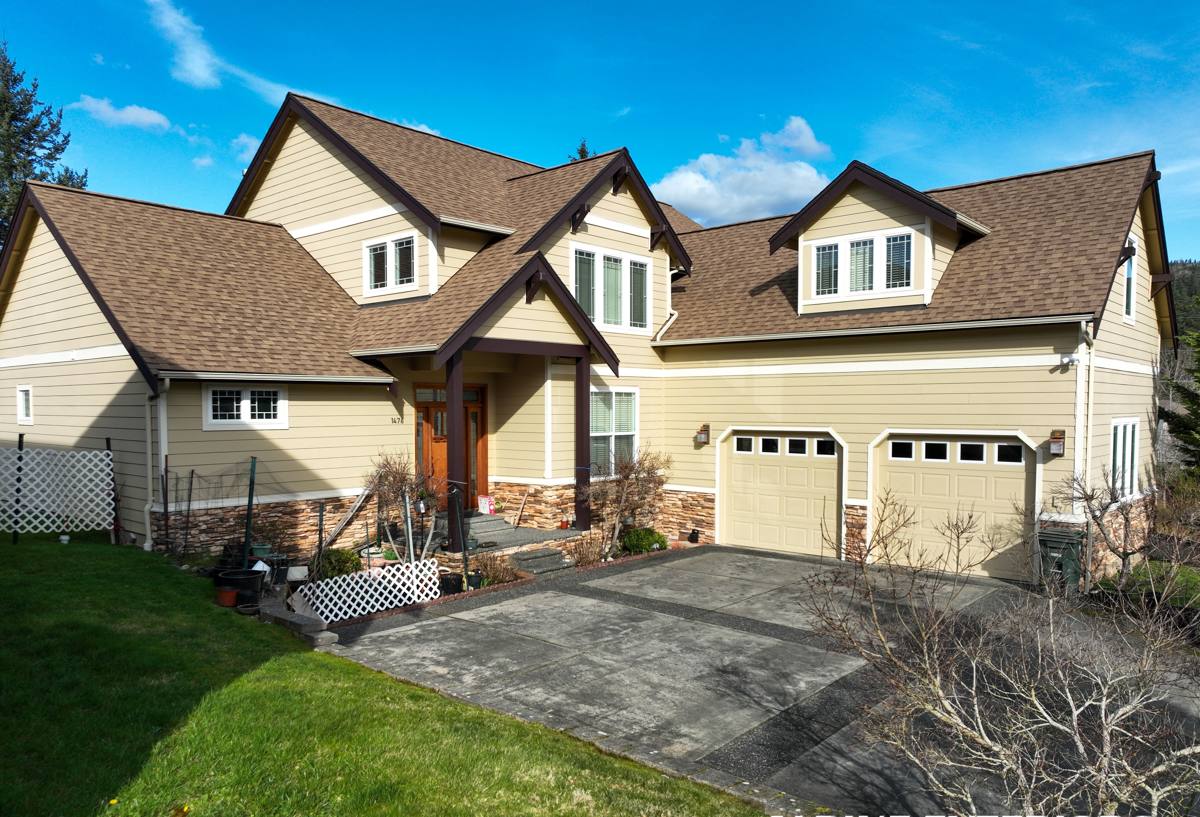
What This Climate Actually Does to Board & Batten Siding
Salt Air
Homes in Burlington aren't right on the water, but the marine air that rolls off Fidalgo Bay and the surrounding sound still carries salt inland, especially on windy days. Salt-laden moisture accelerates corrosion on fasteners, staples, and any exposed metal trim, and it degrades paint and finish faster than it would in a dry inland climate. Board and batten's extra vertical seams mean extra fastener lines exposed to that air over the life of the siding.
Driving Rain
Rain here doesn't just fall — wind pushes it sideways against exterior walls, especially on the west and south-facing sides of a house. A vertical batten profile has to shed that water down the face of the panel and off the battens without letting it work sideways into the seams. This is entirely a function of how the battens are spaced and fastened, not something the material fixes on its own.
Moss and Algae Season
Shade, moisture, and mild temperatures give moss and algae a long growing window in this part of Washington — often nine or more months out of the year. Anything porous or capable of holding surface moisture will host green and black staining faster here than it would in a drier climate. A siding product's surface finish, not just its core material, determines how much of that staining actually happens.
Why the Material Choice Matters More With This Profile
Board and batten can be built from several different base materials, and homeowners in Burlington sometimes come to us after researching options online without realizing how differently those materials perform once the vertical seams and battens are factored in.
| Material | Behavior in This Climate | Long-Term Concern With Battens |
|---|---|---|
| Engineered wood (e.g., LP SmartSide) | Wood-based core; can perform well short-term but is more moisture-sensitive at cut edges and seams | Batten seams create more exposed edges where moisture can wick into the core over time |
| Vinyl board and batten | Won't rot, but expands and contracts significantly with temperature swings; can warp or fade | Battens are often just molded ridges, not true structural relief — less of a genuine profile |
| Primed spruce or cedar boards | Traditional look, but raw wood requires ongoing paint maintenance and is a food source for moss/algae | Every seam and batten joint is a spot that needs re-caulking and repainting on a recurring cycle |
| James Hardie fiber cement (HZ10) | Non-combustible, dimensionally stable, engineered for Pacific Northwest moisture cycles | Factory-cut edges and ColorPlus finish are formulated to hold up at seams and battens without repainting |
We don't install the engineered wood, vinyl, or raw wood options — not because they're bad products in every application, but because we've made non-combustible, climate-engineered fiber cement our standard for the homes we put our name on. Hardie's HZ10 line is specifically formulated for the wetter, milder climate zone that includes western Washington, which is a real engineering distinction, not just marketing language.
What a Correct Board & Batten Install Actually Involves
The board and batten look is simple, but the assembly behind it is not. A correct install includes:
- A continuous weather-resistive barrier installed and lapped correctly behind the panels, with no gaps at penetrations
- Proper panel-to-panel and panel-to-batten spacing to allow for material movement without trapping water
- Correct fastener type, spacing, and depth — over-driven or under-driven fasteners are one of the most common failure points on batten profiles
- Flashing at every window, door, and roofline transition, installed before the siding goes on, not caulked in afterward
- Proper clearance at the bottom of the wall (typically several inches off grade, decking, or roofing) so splash-back and moss-holding debris don't sit against the panel
- Batten strips fastened independently where required, not just decorative caps glued or nailed through the face panel
Skipping any one of these steps can look fine on day one and cause problems two or three winters later, once the wall has been through a full cycle of driving rain and freeze-thaw. This is why we treat installation quality as equal in importance to the product itself.
Our Process for a Burlington Board & Batten Project
1. On-Site Assessment
We look at the existing siding and sheathing, check for moisture damage or rot that needs to be addressed before new siding goes on, and evaluate sun exposure and prevailing wind direction on each wall — details that affect how battens and flashing should be detailed on that specific home.
2. Prep and Weather Barrier
Any damaged sheathing is repaired, and a continuous weather-resistive barrier is installed and properly lapped, with extra attention at windows, doors, and any wall penetrations.
3. Installation
Hardie panels and battens go up to manufacturer specification, with fastener placement, spacing, and flashing details matched to what this climate requires — not a generic install pattern used everywhere regardless of region.
4. Final Inspection and Cleanup
We walk the finished job checking seams, fastener lines, and flashing details before calling it complete, and we clean up the site fully before we leave.
Why It Matters That a Crew Already Works This Area
A contractor who regularly works Anacortes and the surrounding Burlington area already knows the moisture patterns specific to this part of Skagit County, has a working relationship with local permitting requirements, and has seen firsthand how different siding products and installation details actually hold up here over several winters — not just in a manufacturer's climate chart. That local track record matters more with board and batten than with most siding styles, because the extra seams and battens leave less room for installation shortcuts to go unnoticed.
What Board & Batten Costs to Do Right
Pricing depends on the size and shape of the home, the condition of the existing wall assembly, and how much trim and flashing detail the project requires. Rather than quote a number that doesn't reflect your specific house, here's what actually drives cost on a board and batten project:
| Cost Factor | Why It Matters |
|---|---|
| Existing sheathing condition | Rot or moisture damage found during tear-off adds repair scope before new siding can go on |
| Wall complexity | More corners, dormers, and trim transitions mean more cutting, flashing, and labor time |
| Panel size and batten spacing chosen | Wider or narrower batten spacing changes material quantities and layout time |
| Color and finish | Factory-applied ColorPlus finishes vs. field-painted options affect both cost and long-term maintenance |
| Access and site conditions | Multi-story walls, tight lot lines, or landscaping close to the house add labor time |
Maintenance: What Ongoing Care Actually Looks Like
One of the practical advantages of a correctly installed Hardie board and batten system in this climate is how little maintenance it demands compared to wood-based alternatives. A rinse to knock off surface dust and pollen, prompt attention to any gutter overflow or landscaping that's throwing water against a wall, and periodic visual checks at seams and flashing are typically all that's needed. There's no repainting cycle to plan around, because the ColorPlus finish is baked on at the factory rather than applied on site.
A Quick Checklist for Homeowners Evaluating Board & Batten
- Ask what base material is actually being proposed — not just "board and batten style"
- Confirm whether the finish is factory-applied or will need field painting
- Ask how battens are fastened — independently, or just through the face panel
- Confirm a weather-resistive barrier and flashing plan are part of the written scope, not assumed
- Ask whether the contractor regularly works in your specific area and climate zone
- Get the manufacturer warranty terms in writing, including what's required to keep it valid
If you're weighing board and batten for a home in Burlington or elsewhere near Anacortes, we're happy to walk the property, look at what's there now, and give you a straightforward assessment — no pressure, no upsell. Use the form below to request a free estimate.