 Anacortes Siding
 Why Decks Near Bow Wear Out Faster Than Homeowners Expect
Bow sits on the Samish Bay side of Skagit County, just down the road from Anacortes, and that location comes with a specific set of weather conditions that are hard on outdoor structures. Homes here get a steady dose of salt-tinged air off the bay, long stretches of driving rain through fall and winter, and a moss season that can run from October well into spring. None of that is unique to any one property — it's just the reality of building and maintaining anything wooden this close to the water in the Pacific Northwest.
A deck is one of the first things on a house to show that wear. Unlike siding, which is mostly vertical and sheds water quickly, a deck is a horizontal surface that collects rain, holds moisture against the wood, and gives moss a flat, shaded place to take root. Add in salt air accelerating corrosion on fasteners and hardware, and you end up with decks in this area failing years before the same materials would in a drier inland climate. We've replaced enough of them around Bow and greater Skagit County to know exactly where the failure points show up first, and we build every replacement to address those points directly rather than just swapping old boards for new ones.
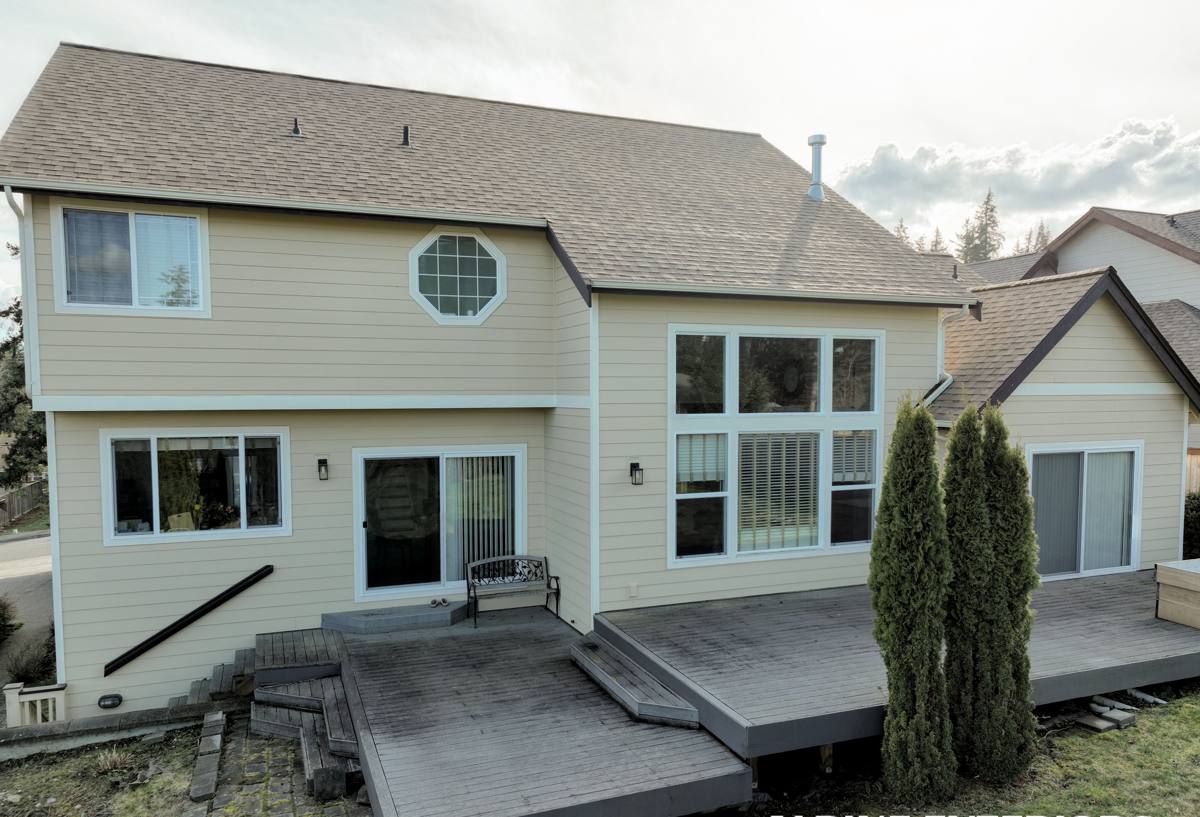
Signs Your Deck Has Reached the End of Its Service Life
Some deck problems are cosmetic and can be handled with cleaning or a few board replacements. Others mean the structure underneath is failing and a full replacement is the only honest recommendation. Here's what we look for during an inspection:
- Boards that feel soft, spongy, or flex noticeably when you walk across them
- Rust streaking or bleeding around nail and screw heads
- A persistent moss or algae carpet that comes back within weeks of cleaning
- Gaps opening up where the ledger board meets the house
- Wobble or give in the railing posts when you lean on them
- A musty or mildew smell coming from underneath the deck
- Visible daylight or soft wood where support posts meet footings
If you're only seeing one or two of these and they're minor, repair may still make sense. Once you're seeing several at once, especially anything involving the ledger board or support posts, the framing has usually absorbed enough moisture that patching individual boards just delays the same conversation a year or two down the road.
What a Correct Deck Replacement Actually Involves
A deck replacement done right is not just a decking-board swap. The parts of the structure you don't see — the ledger connection, the framing, the fasteners — matter more for longevity than the decking material itself, especially in a climate that stays damp for months at a time.
Tear-Off and Structural Inspection
We start by removing the old decking and railing so we can see the framing underneath. This is often the point where a homeowner learns their deck problem is bigger, or smaller, than it looked from the top. Rim joists and beam ends near the house are the most common spot for hidden rot, since they sit closest to the ledger and get the least airflow.
Ledger Board and Flashing
The ledger — the board that bolts the deck to the house — is where the majority of structural failures start in this climate. If it was installed without proper flashing, or with flashing that's failed over time, water works its way behind it and rots both the ledger and the rim joist of the house itself. We install correct step flashing and a water-resistant barrier at this connection every time, whether the original deck had it or not.
Footings and Framing
Footings need to sit below frost depth and bear on solid, undisturbed soil, which matters on lots around Bow with heavier or wetter soil composition. We replace or reinforce any post that's showing rot at the base and use framing lumber rated for ground contact anywhere it's within a few inches of soil or standing water.
Fasteners and Hardware
This is the detail that gets skipped most often on lower-bid deck work, and it's the one that matters most near salt water. Standard galvanized hardware corrodes faster in salt air than it does even a few miles inland. We use stainless steel or heavy hot-dip galvanized fasteners and joist hangers rated for contact with modern treated lumber, which carries different chemical preservatives than the treated lumber of twenty years ago and reacts badly with the wrong metal.
Choosing the Right Decking Material for This Climate
There's no single "best" decking material — there's a best material for your budget, your maintenance tolerance, and how close your property sits to the bay. Here's how the common options actually compare once you factor in Skagit County's rain and moss season:
| Material | Typical Lifespan Here | Moss/Moisture Resistance | Maintenance Needed | Relative Cost |
|---|---|---|---|---|
| Pressure-treated lumber | 10–15 years | Moderate — needs sealing to perform well | Annual cleaning, re-staining every 2–3 years | Lowest upfront |
| Cedar | 12–18 years | Good natural resistance, but surface needs upkeep | Regular cleaning, periodic oiling/sealing | Mid-range |
| Capped composite | 25+ years | Very good — doesn't absorb moisture like wood | Occasional washing, no staining or sealing | Highest upfront |
We're straightforward about the trade-offs here rather than pushing whichever material carries the biggest margin. Pressure-treated lumber is a reasonable choice if budget is the priority and you're willing to keep up with sealing. Cedar looks better longer if it's maintained, but that maintenance is real work in a climate where moss wants to grow on anything horizontal. Capped composite costs more to install but largely removes moss and moisture absorption from the equation, which is why we see more homeowners near the water choosing it even though it isn't the cheapest option on paper.
Our Deck Replacement Process, Start to Finish
- On-site estimate — we walk the existing deck, check the framing where we can access it, and talk through material options and rough budget ranges before any commitment.
- Written scope and pricing — you get a clear breakdown of what's being torn out, what's being replaced, and what material and hardware we're using, so there's no ambiguity later.
- Permit handling — for anything requiring a permit, we prepare and submit the paperwork rather than leaving that step to you.
- Tear-off and disposal — old decking, railing, and any compromised framing come out and get hauled off the property.
- Framing repair or replacement — ledger flashing, joists, beams, and footings get brought up to a standard that will hold for decades, not just pass inspection today.
- Decking and railing installation — installed to the manufacturer's spacing and fastening specs, which matters for warranty coverage on composite products especially.
- Final walkthrough — we go over the finished deck with you and flag anything you should know about care going forward.
Permits and Code Requirements to Know About
Most deck replacements that involve structural work — new footings, a rebuilt ledger connection, or any change to the deck's footprint or height — require a permit through Skagit County. A handful of code points come up on nearly every project:
| Requirement | What It Generally Means |
|---|---|
| Guardrail height | Required once the deck surface is a certain height above grade, typically 36" for residential guardrails |
| Baluster spacing | Openings in railings are limited so a small child can't pass through |
| Stair rail and handrail | Stairs with a certain number of risers require a graspable handrail on at least one side |
| Footing depth | Footings must extend below the local frost line and bear on solid soil |
| Ledger attachment | Must be bolted (not just nailed) with flashing that sheds water away from the house |
Exact numbers depend on your specific deck height, use, and the county's current code adoption, so we confirm the applicable requirements for your project rather than assuming last year's numbers still apply. Skipping permits on structural work isn't just a compliance issue — it can also affect your homeowner's insurance and complicate a future home sale.
Keeping Moss and Rot From Coming Back
A well-built deck still needs some seasonal attention in this climate, especially anything left as bare or stained wood. A little routine care goes a long way toward getting the full lifespan out of the materials you paid for:
- Sweep debris off the deck regularly through fall so wet leaves don't sit and hold moisture against the boards
- Rinse or lightly scrub visible moss or algae before it establishes a foothold rather than after
- Keep gutters and downspouts near the deck clear so runoff isn't draining directly onto it
- Check railing posts and stair connections once a year for any looseness
- Reapply sealant or stain on wood decking on the schedule the product calls for, not just when it looks faded
- Make sure under-deck airflow isn't blocked by stored items or overgrown landscaping
Why a Crew That Already Works the Bow Area Matters
Deck framing and hardware choices that work fine forty miles inland don't always hold up the same way this close to Samish Bay. A crew that's worked properties around Bow and Anacortes already knows to spec corrosion-resistant hardware as standard rather than as an upsell, already has a feel for how local soil handles footings, and already knows which decking products actually perform through a full wet season here versus which ones just look good in a showroom. That local track record also means faster, more accurate estimates — we're not guessing at how this climate will treat a given material, we're telling you what we've already seen hold up and what hasn't.
If your deck is showing any of the wear signs above, or you just want an honest read on whether repair or replacement makes more sense for your situation, we're happy to take a look. Reach out for a free, no-pressure estimate using the form below.