 Anacortes Siding
 What "New-Construction Windows" Actually Means
In the window trade, "new-construction" doesn't just mean a brand-new house. It refers to a specific type of window — one with a nailing fin (sometimes called a flange) around the perimeter of the frame — installed into a wall opening that's open to the sheathing. That's different from a "replacement" or "insert" window, which is built without a fin and slides into an existing frame that stays in place. Both are legitimate approaches, but they solve different problems, and using the wrong one in the wrong situation is one of the more common sources of water intrusion we get called out to fix in West Anacortes.
New-construction windows come into play on a few kinds of jobs: ground-up new builds, additions, sunroom or bump-out conversions, and — the one we see most often in this neighborhood — full re-sides where we're stripping a house down to the sheathing anyway. If the wall's already open, installing a proper nail-fin window with fresh flashing is almost always the better long-term move than reusing an old frame, even if it costs a bit more up front.
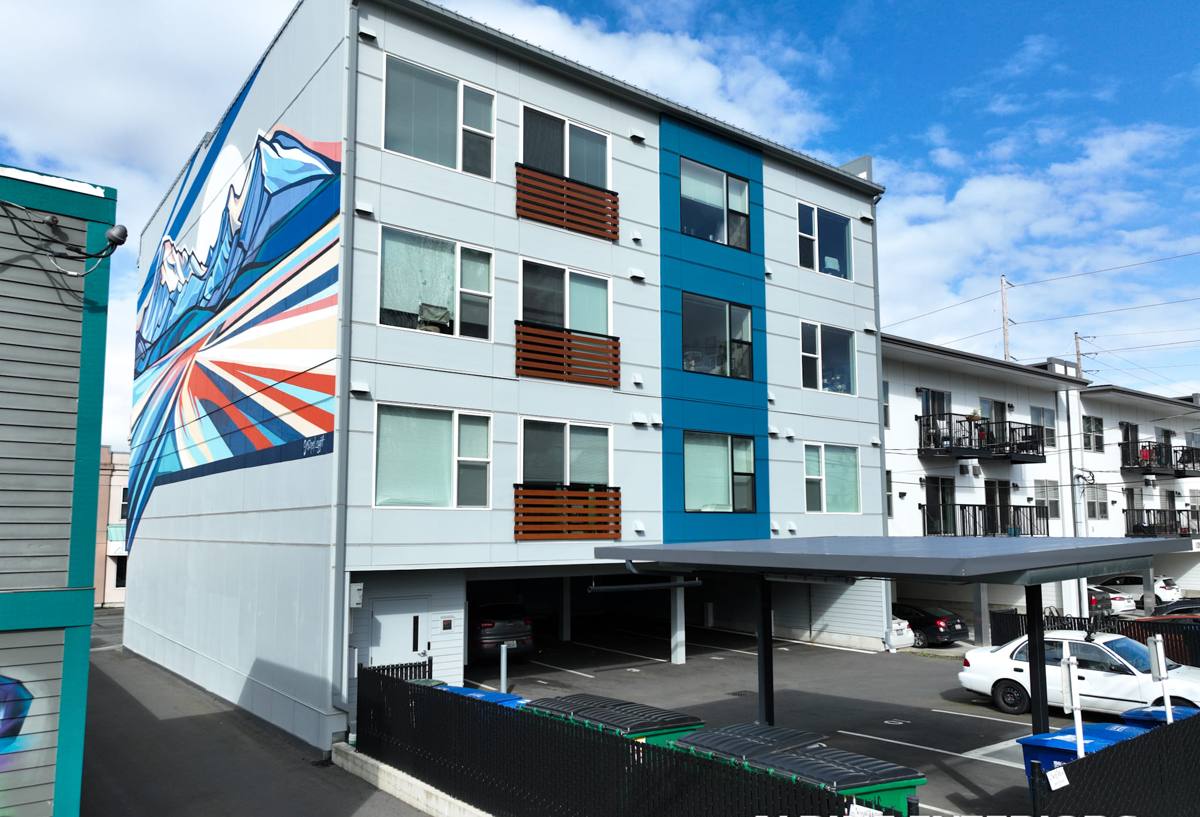
Why West Anacortes' Marine Climate Changes the Job
West Anacortes sits close enough to the water that homes take a steady diet of salt-laden air, wind-driven rain, and long stretches of damp, mossy weather most of the year. That combination is hard on window openings specifically because it attacks from two directions at once: airborne salt accelerates corrosion on fasteners and lesser-grade hardware, while driving rain — rain that's pushed sideways by wind instead of falling straight down — finds its way into any gap in the flashing that a calmer climate would never expose.
A window that's technically "installed" but not properly flashed for this kind of exposure can look fine for a year or two and then start showing water staining on interior sills, soft trim, or mold at the corners. Skagit County's long moss season adds another layer — moss and organic debris hold moisture against siding and trim near window openings longer than a drier climate would, so any weak point in the water management detail stays wet longer and fails faster. None of this is exotic; it's just why we treat window flashing as a full weather-barrier system here, not an afterthought.
What a Correct Installation Involves
A properly installed new-construction window in this climate follows a specific sequence. Skipping or reordering these steps is where most leaks originate — not from the window unit itself, which is almost always the more durable part of the assembly.
The core sequence
- Rough opening prep — squaring, leveling, and confirming the opening is sized correctly before anything goes in.
- Sill pan flashing — a sloped, sealed pan at the bottom of the opening so any water that does get past the window has a path back out, instead of pooling against the sheathing.
- Window-to-WRB (weather-resistive barrier) integration — the housewrap or building paper has to lap correctly with the window flashing tape, in the right shingle-style order, so water sheds down and out at every layer.
- Nailing fin fastening — fasteners set per the manufacturer's pattern and spacing, not just "enough to hold it."
- Flashing tape at jambs and head — properly lapped, not just stuck on flat, with a head flashing detail that sheds water away from the top of the frame.
- Interior and exterior sealant — the right sealant in the right location; over-sealing everything is almost as bad as under-sealing, since it can trap moisture instead of letting it drain.
Every one of those steps matters more here than it would in a drier, calmer climate. A gap that a dry-climate installer might not think twice about is exactly where wind-driven rain off the water finds its way in.
New-Construction vs. Replacement Windows — Which Applies to Your Project
| Factor | New-Construction (Nail-Fin) | Replacement (Insert) |
|---|---|---|
| Wall condition needed | Sheathing exposed / opening framed | Existing frame stays in place |
| Best used for | New builds, additions, full re-sides | Window-only upgrades, siding staying intact |
| Flashing control | Full — fresh WRB and flashing tie-in | Limited to existing opening's condition |
| Disruption | Higher — exterior wall opened up | Lower — mostly interior/exterior trim only |
| Long-term water management | Strongest, when siding is off anyway | Depends heavily on the old frame's condition |
If you're re-siding your West Anacortes home and the wall is already open, we'll almost always recommend new-construction windows even at existing openings — it's the one chance to correct old flashing mistakes without opening the wall again later. If the siding is staying and only the windows need work, an insert replacement is usually the more practical and less invasive path.
Our Process
We treat window installation as part of the building envelope, not a standalone product swap. On a typical West Anacortes project:
- We assess the existing wall assembly, siding condition, and any signs of past water intrusion before quoting anything.
- We confirm window sizes, styles, and openings against the home's actual framing — not just the old measurements.
- We remove siding and trim around each opening carefully enough to inspect the sheathing underneath.
- We replace any sheathing that's soft, delaminated, or water-damaged before a new window ever goes in — installing a new window over compromised sheathing just delays the problem.
- We install sill pans, WRB laps, and flashing tape in the sequence outlined above, on every opening, every time.
- We set and fasten the window per manufacturer spec, then seal and trim it out to match the home.
- We button up siding and trim, and walk the finished openings with the homeowner before calling the job done.
Materials and Product Considerations for This Area
We don't push one window brand as the only "correct" choice — several manufacturers make solid vinyl, fiberglass, and clad-wood products that hold up fine on the water side of Skagit County. What we do care about is matching the frame material and hardware grade to the exposure:
- Vinyl is a reasonable, cost-effective choice for most West Anacortes homes and handles salt air well since it doesn't corrode, though frame color and quality vary a lot between manufacturers.
- Fiberglass tends to hold up better than vinyl under sustained UV and temperature swing, and is worth the upgrade cost on more exposed, west-facing walls.
- Wood-clad windows look great and perform well when detailed correctly, but they demand more disciplined flashing and maintenance in a salt-air, high-moisture climate — we're upfront with homeowners about that added maintenance burden before they commit to wood-clad on an exposed elevation.
- Hardware and fasteners matter as much as the frame — we use corrosion-resistant fasteners throughout, since standard hardware can start showing rust well before the window itself shows any wear in a salt-air environment.
Mistakes We See on West Anacortes Homes
Most of the water problems we're called to fix didn't come from a bad window — they came from a shortcut somewhere in the installation. The recurring ones:
- Housewrap taped flat over the flashing fin instead of properly lapped in shingle order, so water runs behind the WRB instead of over it.
- No sill pan, or a flat sill pan with no slope, so water that gets past the window sits against bare sheathing.
- Caulk used as the primary water barrier instead of proper flashing — caulk fails first, and in this climate it fails faster.
- Reusing an old, out-of-square opening without checking the sheathing condition underneath.
Planning a Project: A Practical Checklist
- Confirm whether your project actually calls for new-construction (nail-fin) or replacement (insert) windows — don't let a contractor default to whichever is easier for them.
- Ask what happens if sheathing is found to be damaged once the wall is opened, and get that answer in writing before work starts.
- Ask specifically how sill pans and WRB laps will be handled — a contractor who can answer in detail has done this before in this climate.
- Get frame material recommendations based on your home's actual sun and wind exposure, not a one-size-fits-all pitch.
- Confirm fastener and hardware corrosion resistance, especially on homes closer to the water.
- Ask how the crew handles siding and trim tie-in around the new openings so the finished look matches the rest of the house.
Why Local Experience on This Job Matters
Window flashing details that work fine inland can fall short here. A crew that's worked other homes in West Anacortes and elsewhere in Skagit County already knows which elevations take the worst of the driving rain, how long moss season stays wet against trim, and where salt air causes the earliest wear. That's not something you can fully substitute with a generic installation manual — it's pattern recognition built from doing this work, on this coastline, repeatedly. Getting the flashing sequence right the first time is far cheaper than fixing water damage two or three winters later.
If you're planning a new build, an addition, or a full re-side in West Anacortes and want windows installed the right way from the start, we're happy to walk the project with you and put together a free, no-pressure estimate. Use the form below to get started.