 Anacortes Siding
 Why March Point Homes Wear Out Siding Faster
March Point sits on a spit of land surrounded on three sides by water — Fidalgo Bay to the east, the Swinomish Channel and refinery tidelands to the south and west. That geography is part of what makes the area distinctive, but it also means homes here take a harder hit from the elements than houses just a few miles inland in Anacortes proper. Salt-laden air off the bay works on fasteners, trim, and any siding seam that isn't sealed correctly. Wind-driven rain off the water finds gaps that would never be a problem in a more sheltered yard. And the long gray stretch from October through April keeps north- and west-facing walls damp enough, long enough, that moss and algae get a real foothold.
None of this means March Point is an unusually hostile place to own a home. It means the siding has to be chosen and installed with those specific conditions in mind, rather than treated as an afterthought behind paint color and price. A replacement job done right here should look the same in fifteen years as it did on install day. A job done generically — using whatever product and technique works fine in a drier, calmer part of Skagit County — tends to show its age early, usually starting at the corners, the bottom courses, and anywhere two pieces of siding meet.
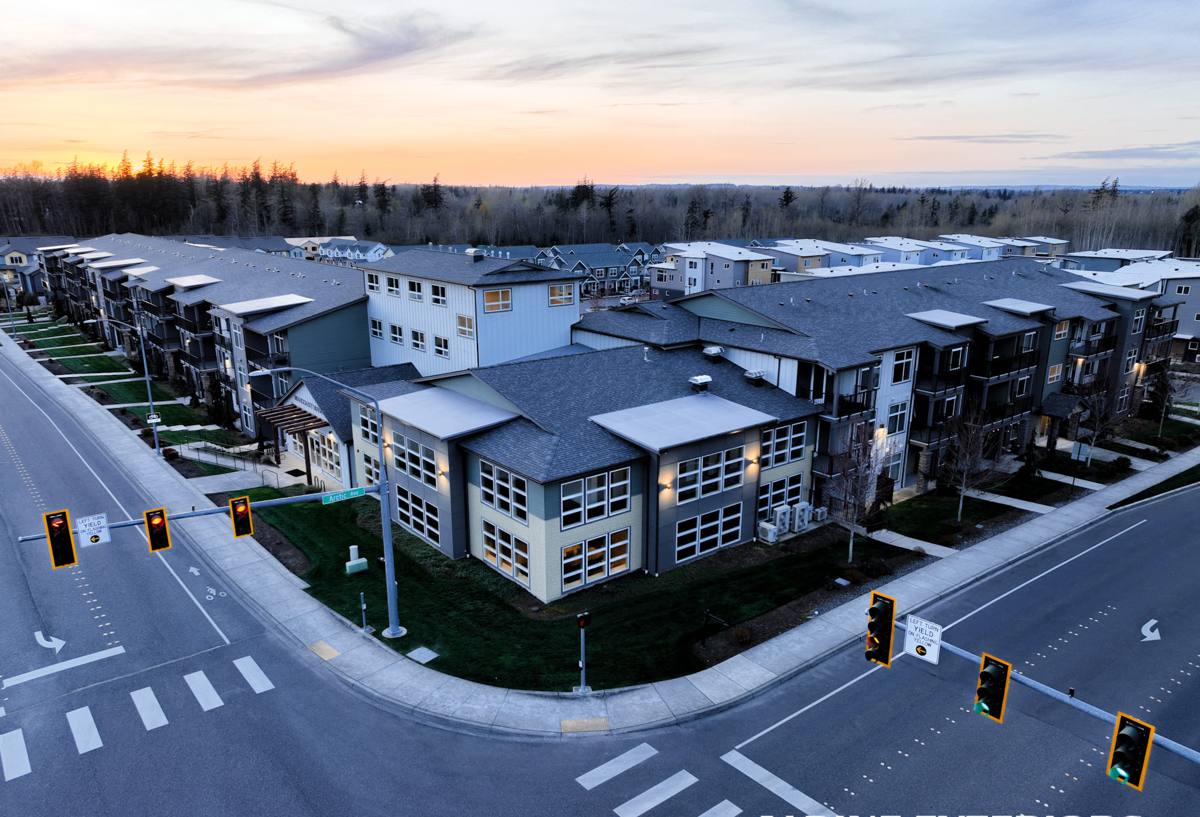
What "Correct" Looks Like in This Climate
A siding replacement in March Point has to solve for three things at once: salt exposure, wind-driven moisture, and sustained dampness that feeds moss and mildew. Here's how each one changes the job.
Salt Air and Fasteners
Salt air accelerates corrosion on anything metal that isn't rated for a marine or near-marine environment — nail heads, flashing, trim fasteners, even some manufacturer-supplied hardware. On a proper install, every fastener and flashing detail on a home this close to the water should be corrosion-resistant, not just "exterior grade." This is a detail that's invisible once the job is done and painted over, which is exactly why it gets skipped by crews trying to shave time or cost.
Wind-Driven Rain
Anacortes gets rain that doesn't fall straight down — it comes sideways off the water during storms, which means it's testing every horizontal lap, every window and door flashing, and every inside corner far harder than a calm rain would. Siding that relies on caulk alone to stay watertight at those joints will eventually fail; caulk is a maintenance item, not a waterproofing system. The house wrap, flashing sequence, and drainage plane behind the siding matter as much as the siding itself.
Moss and Sustained Dampness
Shaded, north-facing walls and anywhere siding sits close to landscaping or overhangs tend to stay damp for days at a stretch during the wet season. That's exactly the environment moss and mildew need. Siding material, paint finish, and even the gap left between siding and grade or hardscape all affect how much of that growth actually takes hold.
Why We Only Install James Hardie Fiber Cement
We install exclusively James Hardie fiber cement siding — not vinyl, not LP SmartSide, not Cemplank, Allura, primed spruce, or cedar. That's not a marketing position; it's a standard we hold because of what we've seen hold up in exactly this kind of climate versus what doesn't.
Vinyl siding is inexpensive and easy to install, but it expands and contracts significantly with temperature swings, which opens gaps at laps and trim over time — gaps that wind-driven rain will find. It's also vulnerable to warping near heat sources and doesn't hold paint, so if the color fades or a homeowner wants a change, the whole product often needs replacing rather than repainting.
Wood-based composite and engineered wood products (like LP SmartSide) and traditional cedar or primed spruce all share a common vulnerability: they're wood at their core. Wood-based siding depends on an intact factory or field-applied coating to keep moisture out, and any breach — a fastener hole, a cut edge, a scuff during install — gives water a path into a material that will swell, rot, or delaminate if it stays wet. In a climate with a genuine wet season and salt air working on every seam, that margin for error is thinner than we're willing to build a warranty on.
James Hardie fiber cement is non-combustible and dimensionally stable — it doesn't expand and contract the way vinyl does, and it doesn't have a wood substrate that rots if moisture gets past the surface. Hardie's ColorPlus factory finish is baked on under controlled conditions, which holds up to UV and salt air better than field-applied paint and comes with its own finish warranty. The HZ5 product line, engineered specifically for climates with real moisture exposure, is what we spec for anything on or near the water in Skagit County, March Point included.
| Material | How It Holds Up in Salt Air / Wet Climate | Long-Term Maintenance |
|---|---|---|
| James Hardie fiber cement (HZ5) | Non-combustible, dimensionally stable, factory finish resists salt and UV | Occasional wash; repaint only if desired, not required for protection |
| Vinyl | Expands/contracts with temperature, seams can open over time | Low upkeep but limited repair options; fades and can't be repainted easily |
| Wood-based composite (e.g., LP SmartSide) | Coating-dependent; cut edges and fastener holes are moisture entry points | Requires vigilant caulking and repainting to keep coating intact |
| Cedar / primed spruce | Natural wood; absorbs moisture if finish fails, prone to rot in sustained dampness | Regular refinishing needed; highest ongoing maintenance |
What a Proper Siding Replacement Job Involves
Replacing siding isn't just pulling off old boards and nailing up new ones. On a March Point home, the sequence matters as much as the material.
- Tear-off and inspection. Once old siding is off, the sheathing underneath gets a real look — this is where hidden water damage from years of marginal flashing shows up, and it needs to be addressed before anything new goes on.
- Weather-resistant barrier. A proper house wrap or building paper goes on as the drainage plane, lapped correctly so water sheds outward and down, not into the wall cavity.
- Flashing at every penetration. Windows, doors, hose bibs, vents, and any other wall penetration get flashed before siding covers them — this is the step wind-driven rain punishes hardest if it's rushed.
- Corrosion-resistant fastening. Given the salt exposure this close to Fidalgo Bay, fasteners and any exposed hardware should be rated for it, not just standard exterior-grade.
- Hardie installation to manufacturer spec. Proper gapping, clearance from grade and roof lines, correct nailing pattern, and factory-mitered or field-caulked joints done to spec — all of which affect both the warranty and how the siding performs in wind and rain.
- Trim and caulking as a system, not a patch. Caulk at joints is a backup, not the primary defense — it should be applied as part of a complete flashing and lap system, not as the thing holding water out on its own.
Our Process for March Point Homeowners
We approach every March Point job the same practical way:
- On-site assessment of the current siding, sheathing condition, and any trouble spots specific to the home's exposure (which walls face the water and prevailing wind matters)
- Honest scope of work — what's failing, what's salvageable, and what the replacement should include
- Written estimate with the product line (typically HZ5 for this area) and color spelled out clearly, no vague allowances
- Tear-off, sheathing repair if needed, and a full weather-barrier and flashing install before any new siding goes up
- Installation to James Hardie's published specifications, because that's what keeps the manufacturer's warranty valid
- A final walkthrough so you know exactly what was done and why
Cost Factors Specific to This Job
Every siding replacement price depends on the same core variables, but a few carry extra weight on a March Point property specifically.
| Factor | Why It Matters Here |
|---|---|
| Sheathing condition after tear-off | Water intrusion from years of marginal flashing is more common on water-exposed walls and adds repair cost before new siding goes on |
| Wall exposure to wind and salt spray | Water- and wind-facing elevations may need more attention to flashing and fastener spec than sheltered walls |
| Home size and number of corners/penetrations | More windows, doors, and trim details mean more flashing work, which affects both material and labor |
| Existing siding removal complexity | Multiple layers of old siding or extensive rot add tear-off time |
| Color and trim selection | Factory ColorPlus finishes and trim upgrades affect material cost but reduce future repainting |
We give real numbers during the on-site estimate rather than a phone quote, because sheathing condition and exposure genuinely can't be judged from a description alone.
Signs Your March Point Home Needs Siding Replacement Now
- Persistent moss or dark staining on north- or west-facing walls that comes back shortly after cleaning
- Soft spots, bubbling, or visible warping in wood-based or composite siding
- Paint that's peeling or bubbling rather than just fading evenly
- Gaps opening at siding laps, corners, or trim joints
- Rust streaking from fasteners or trim hardware
- Any musty smell or visible staining on interior walls that share an exterior with a suspect area
Any one of these on its own might be a minor repair. Several together, especially on a home that's had the same siding for fifteen-plus years, usually means the material itself is at the end of its useful life in this climate, not just due for a touch-up.
Why Local Experience on This Peninsula Matters
A contractor who mostly works drier, more sheltered parts of Skagit County can install siding correctly by the book and still miss the details that matter specifically on a spit of land surrounded by tidewater. Knowing which elevations take the worst of the wind here, how much salt exposure actually changes fastener choice, and how long walls stay wet during a normal Anacortes winter isn't something you get from a spec sheet — it comes from having done the work on homes like this one, in this exact place, repeatedly. That's the difference between siding that looks right on install day and siding that still looks right in year twelve.
Get a Straight Answer for Your Home
If your March Point home's siding is showing its age, we'll come take a real look — not a drive-by guess — and give you a straightforward estimate for a James Hardie replacement built for this exact stretch of coastline. No pressure, no upsell games, just what your house actually needs. Fill out the form below to schedule a free estimate.