 Anacortes Siding
 Siding That Has to Earn Its Keep in Skagit County
Mount Vernon and Anacortes sit close enough together, and close enough to Puget Sound and the tidal reaches of the Skagit River, that homes in both places take a similar beating from the weather even though the towns feel different day to day. Anacortes gets the more direct salt air off the water. Mount Vernon gets more of the valley's driving rain and the damp, shaded conditions that keep moss growing most of the year. Either way, siding here isn't just a cosmetic choice — it's the layer standing between your framing and a climate that rarely lets a house fully dry out.
That's the lens we use on every fiber cement siding job in this area. Not "what looks good in a showroom," but "what's going to hold up on this specific house, on this street, in this weather, for the next thirty-plus years." Fiber cement earns its reputation here because it's dimensionally stable, it doesn't feed moss and mildew the way wood-based products can, and it doesn't degrade in salt-laden air the way some other siding materials do over time.
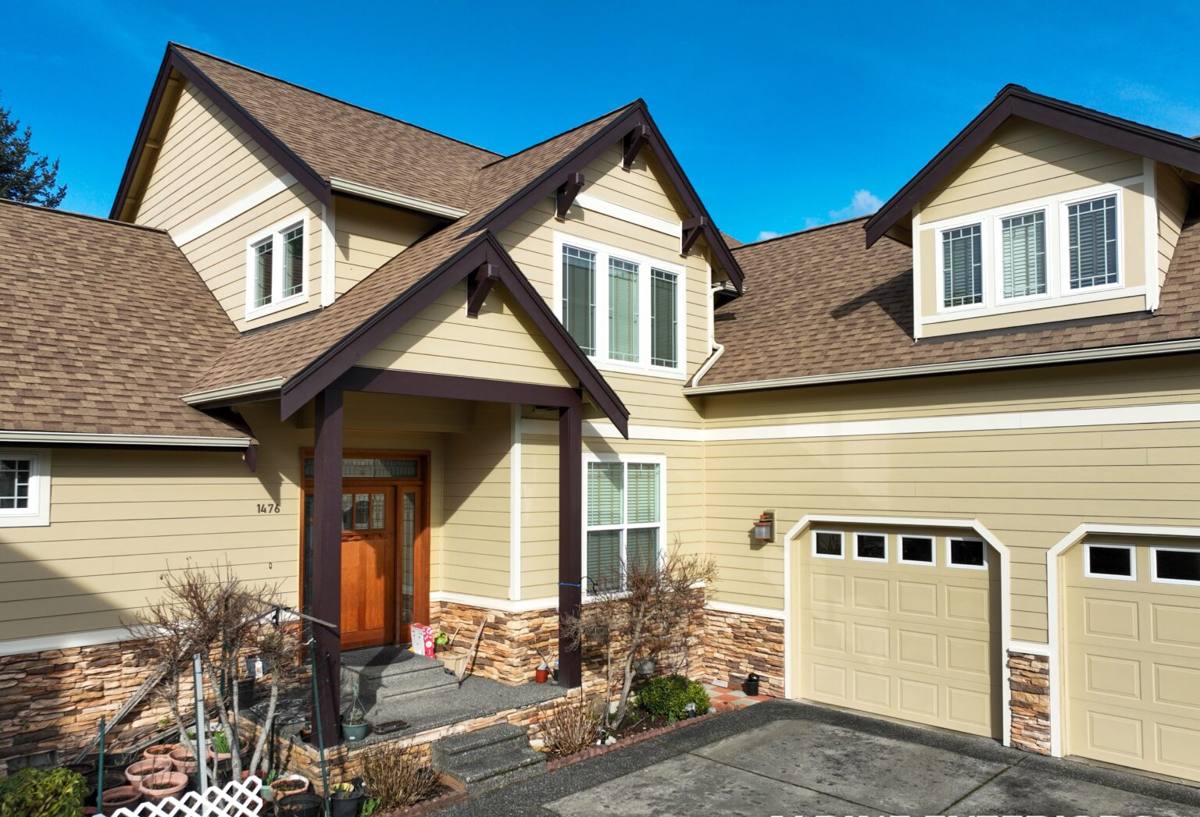
Why We Only Install James Hardie Fiber Cement
We install one siding system: James Hardie fiber cement. We don't carry LP SmartSide, vinyl, Cemplank, Allura, primed spruce, or cedar, and that's a deliberate professional standard, not an accident of what we happen to stock.
Vinyl is inexpensive and easy to install, but it's a petroleum-based product that expands and contracts with temperature and can crack or warp under UV exposure and impact over time — and in a marine climate like this one, it doesn't hold up to hard weather the way a cement-based board does. Wood-based composite siding like LP SmartSide performs reasonably well when it's installed and maintained exactly to spec, but it's an engineered wood product at its core, which means the cut edges, seams, and any breach in the factory coating are places moisture can get in and cause swelling or rot — a real risk in a region that stays wet as much of the year as Skagit County does. Primed spruce and cedar are real wood, full stop, which means they need ongoing painting, caulking, and vigilance against rot, insects, and moss to survive here long-term.
James Hardie fiber cement is cement, sand, and cellulose fiber — it doesn't rot, it doesn't feed insects, and it isn't affected by moisture the way wood or wood composites are. It's also non-combustible, which matters more each year as wildfire smoke and ember exposure become a bigger part of Pacific Northwest summers. We standardized on it because it's the one product we've found that consistently holds up to this exact combination of salt air, rain, and moss without asking the homeowner to fight the climate every year to keep it looking right.
What Fiber Cement Actually Is
Fiber cement siding is manufactured under pressure and cured, which gives it its dimensional stability — it doesn't swell, shrink, or warp with humidity the way wood does. James Hardie boards are engineered specifically by climate zone, and the products sold in this region are built to the HZ5 specification for the Pacific Northwest's wet, moderate climate, meaning the moisture and freeze-thaw performance is matched to what a house here actually experiences.
What Salt Air, Driving Rain, and Moss Season Do to Siding
Salt Air and Coastal Exposure
Anacortes homes closer to the water deal with airborne salt that settles on exterior surfaces and accelerates corrosion of exposed metal — fasteners, flashing, trim screws. It doesn't harm the fiber cement board itself, but it makes the fastener and flashing choices on a Hardie installation matter more than they would on an inland home. We use corrosion-resistant fasteners and flashing details sized for this exposure, not generic hardware picked to save a few dollars per box.
Driving Rain and Wind-Driven Moisture
Both towns get rain that doesn't just fall straight down — wind off the Sound and through the valley pushes it sideways into wall assemblies, especially on upper stories and exposed gable ends. Siding that isn't lapped, flashed, and caulked correctly will let that wind-driven rain find a way behind the cladding, and once water gets behind siding in this climate, it rarely gets a chance to fully dry before the next storm arrives. This is why the installation detailing matters as much as the material itself.
The Long Moss Season
Shaded, damp exteriors in this region grow moss and algae for most of the year, not just in the depths of winter. Wood and wood-composite sidings give moss something to root into over time, especially at seams, laps, and any spot where the factory coating has worn thin. Fiber cement's cement-based surface, especially with a factory ColorPlus finish, gives moss and mildew far less to hold onto, and what does grow on the surface washes off far more easily than it does off bare or painted wood.
What a Correct Fiber Cement Installation Actually Involves
Fiber cement siding is only as good as the installation behind it. A huge share of the siding failures we get called out to inspect on other contractors' work aren't material failures — they're installation shortcuts that let water in behind a product that would have otherwise lasted decades.
Water Management Comes First
Before a single board goes up, the wall needs a correctly installed weather-resistant barrier, properly lapped and taped, with flashing at every window, door, and horizontal transition. Fiber cement is not a waterproof membrane by itself — it's a durable rain-screen material that relies on the assembly behind it to manage the water that inevitably gets past the siding surface.
Fastening, Clearances, and Gaps
James Hardie publishes specific fastener patterns, clearances from grade, roof lines, and decks, and gap requirements at butt joints and trim. Skipping these — nailing too high or too low, closing up expansion gaps, letting siding touch a roof or deck surface — is exactly what turns a well-made product into a callback a few years later. We follow Hardie's published installation guidelines because they're written for climates like this one, not because it's the minimum to pass inspection.
Trim, Caulking, and Finish Details
Corners, trim boards, and joints are where most leaks start on any siding job. We use compatible trim products, the caulk types Hardie specifies for its boards, and factory-finished ColorPlus material wherever possible so the color coat itself is baked on and warrantied, rather than relying on field-applied paint to hold up to this climate for the long haul.
Choosing the Right Hardie Product for a Mount Vernon or Anacortes Home
Not every Hardie product fits every house, and part of doing this job right is matching the product line to the home's style, exposure, and budget rather than defaulting to one option for every project.
| Hardie Product | Best Fit | Local Consideration |
|---|---|---|
| HardiePlank lap siding | Traditional and craftsman-style homes | Most common choice; wide range of exposures and profiles |
| HardiePanel vertical siding | Modern builds, accent walls, gable ends | Clean lines; works well paired with lap siding for contrast |
| HardieShingle | Craftsman and cottage-style homes | Popular for Pacific Northwest architectural styles |
| HardieTrim | Corners, window and door surrounds, fascia | Matched material avoids the rot risk of wood trim in wet climates |
ColorPlus vs. Field-Applied Paint
ColorPlus finish is baked on at the factory under controlled conditions and comes with its own finish warranty. Primed-only board that gets painted on site depends entirely on the weather conditions during application and the quality of the paint job — a harder thing to control in a region where dry, mild painting windows aren't guaranteed. We recommend ColorPlus for most Mount Vernon and Anacortes projects for exactly that reason.
Cost Factors on a Fiber Cement Siding Project
There's no honest single price for a siding job — the real cost depends on the specifics of the house. These are the factors that actually move the number, so you know what you're being quoted for.
| Factor | Why It Matters |
|---|---|
| Home size and number of stories | More square footage and taller walls mean more material, labor, and staging/scaffolding time |
| Condition of existing sheathing | Rot or moisture damage found during tear-off means repair before new siding can go on |
| Product line and profile | Lap, panel, and shingle products have different material and labor costs |
| ColorPlus vs. field paint | Factory-finished board costs more up front but removes a recurring maintenance cost |
| Trim and detail work | Homes with more corners, window trim, and architectural detail take more labor per square foot |
| Access and site conditions | Tight lots, slopes, and second-story exposure affect staging and scaffolding needs |
Our Process, Start to Finish
- On-site assessment — we walk the exterior, check the condition of the existing siding and sheathing, and talk through what the house actually needs.
- Written estimate — a clear scope of work and product selection, not a vague number.
- Tear-off and sheathing repair — old siding comes off, and any moisture-damaged sheathing underneath is repaired before anything new goes up.
- Weather barrier and flashing — the water-management layer goes in first, correctly lapped and flashed at every penetration.
- Hardie installation — boards, panels, or shingles installed to manufacturer fastening, clearance, and gap specifications.
- Trim, caulking, and finish detail — corners, trim, and joints finished to shed water, not just look clean.
- Final walkthrough — we go over the finished job with you before we call it done.
Why Hiring a Crew That Already Works in Mount Vernon and Anacortes Matters
Siding installation is regional work more than people expect. A crew that mostly works drier inland climates can install a technically correct assembly that still isn't detailed for the amount of wind-driven rain and sustained moisture this part of Skagit County sees. Working Mount Vernon and Anacortes regularly means we've already made the judgment calls specific to this weather — fastener corrosion resistance near the water, flashing details sized for driving rain, and finish choices that resist moss rather than feeding it.
It also means we're not guessing at how a house here will age. We see our own work years later, on the next job down the street or the next referral in the same neighborhood, and that feedback loop is what keeps the installation standards honest.
What to Expect After Installation
Fiber cement with a ColorPlus finish is genuinely low-maintenance compared to wood or wood-composite siding, but "low-maintenance" isn't "no-maintenance." A short seasonal checklist keeps a Hardie installation performing the way it's designed to:
- Rinse the exterior once or twice a year to clear off salt residue, pollen, and early moss growth before it takes hold
- Keep gutters clear so overflow doesn't run down the siding face repeatedly in one spot
- Trim back shrubs and trees that keep sections of the wall shaded and damp
- Check caulking at trim joints and penetrations every couple of years and have any cracked or missing caulk redone
- Have any impact damage (from a ladder, equipment, or storm debris) repaired promptly rather than left exposed
None of that is heavy lifting, and it's a fraction of what a wood or wood-composite exterior asks for in this climate over the same span of years.
Get a Straight Answer on What Your Home Needs
If you're weighing a siding replacement in Mount Vernon or Anacortes, the most useful next step is having someone look at your actual house — the exposure it gets, the condition of what's currently on the walls, and what a correctly detailed James Hardie installation would look like for it. We'll give you a straightforward, no-pressure estimate based on what we see, not a generic price list. Use the form below to get started.