 Anacortes Siding
 Building a Deck That Actually Holds Up in March Point
March Point sits right up against the water on Fidalgo Bay, which means homes here take a different kind of weather beating than a deck built ten miles inland. Wind off the bay carries salt, rain comes in sideways more often than not, and the shaded, damp stretches of the year let moss and algae take hold on anything horizontal. A deck built to a generic spec sheet will show its age fast in this environment — soft spots, rusted fasteners, slick boards, and railings that loosen years before they should. A deck built for March Point specifically holds up because every material and connection was chosen with that exposure in mind.
This page covers what we actually do differently when we build or replace a deck for a March Point property, from the fasteners buried inside the frame to the decking surface you walk on every day.
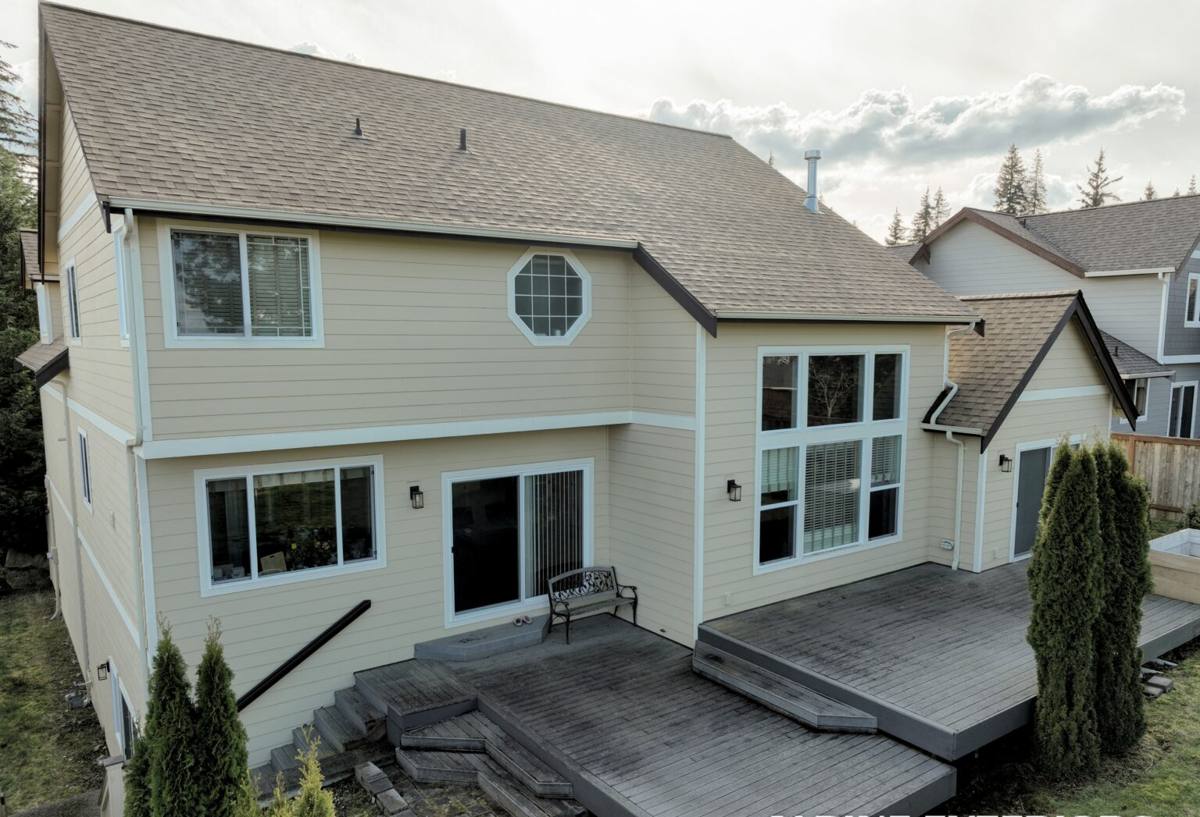
What the Local Climate Does to a Deck Over Time
Skagit County's marine air is the single biggest factor in how a deck ages here, and it works on three fronts at once.
Salt-Laden Air
Even a few hundred yards from open water, airborne salt accelerates corrosion on any metal that isn't rated for it. Standard carpentry screws, cheap joist hangers, and uncoated bolts can start rusting within a couple of seasons in a spot like March Point. Once a fastener rusts, it loses grip strength — and on a deck, the fasteners are what's holding the whole structure to your house.
Driving Rain
Storms off the Sound don't just fall straight down here; wind pushes rain sideways and up under railings, ledger boards, and stair stringers. Any gap in flashing or any spot where water can pool instead of shed becomes a rot starting point, usually hidden from view until the damage is well established.
Long Moss Season
Between the rain and the tree cover common around March Point properties, decking surfaces stay damp for long stretches of fall, winter, and spring. That's exactly what moss and green algae need to establish. Beyond looking bad, a mossy deck surface gets genuinely slippery and holds moisture against the board longer, which shortens the life of the wood or composite underneath it.
Decking Material Comparison for This Environment
There's no single "best" decking material — the right choice depends on how much upkeep you want to do and what you're willing to spend up front versus over time. Here's how the common options actually perform under March Point conditions.
| Material | Moisture & Moss Resistance | Maintenance | Typical Lifespan Here |
|---|---|---|---|
| Pressure-treated fir/hem-fir | Fair — needs sealing to perform well | Annual cleaning, re-seal every 1-2 years | 10-15 years with upkeep |
| Cedar | Good — naturally rot-resistant, still needs care | Cleaning plus periodic oil or stain | 15-20 years with upkeep |
| Capped composite (e.g. Trex, TimberTech) | Very good — won't rot or absorb water | Periodic wash to knock off surface algae | 25-30+ years |
| Uncapped composite (older-style) | Weaker — can absorb moisture at the core | More frequent cleaning, watch for swelling | Variable, often shorter than capped |
We install all of these, but for a March Point deck we're honest with clients about the trade-off: wood costs less up front but demands real annual maintenance to fight the moss and moisture in this climate, while capped composite costs more initially but largely shrugs off the conditions that wear wood down fastest here.
The Framing and Fasteners Most Decks Get Wrong
The decking surface is what you see, but the framing underneath is what determines whether the deck is safe and how long it actually lasts. This is where corner-cutting shows up years later as a structural problem, not just a cosmetic one.
Ledger Board Flashing
The ledger board — where the deck attaches to your house — is the single most common failure point on decks in wet climates. If it isn't properly flashed with a water-diverting membrane behind and over it, rain works its way behind the ledger and rots the rim joist it's bolted to, which is a structural problem, not a cosmetic one. We flash every ledger connection as standard practice, not an upsell.
Fasteners and Hardware
Given the salt exposure around March Point, we use stainless steel or heavy hot-dip galvanized fasteners and connectors rated for coastal/marine use, not the standard zinc-coated hardware that's fine further inland. It costs more per box, but a rusted-out joist hanger is a much more expensive problem to fix once the deck is built and covered.
Joist Spacing and Blocking
Tighter joist spacing and proper blocking reduce bounce and give composite decking the support it's rated for — composite manufacturers generally require closer spacing than solid wood does, and skipping that voids the material warranty.
Footings, Drainage, and Local Soil
Skagit County's lowland soils near the bay tend to hold water and can include softer, siltier layers that don't compact as reliably as soil further from the shoreline. That affects how deep and how wide footings need to be to stay stable over time.
- Footings sized and set below the local frost line, per current Skagit County building code
- Post bases that hold the post up off the concrete so end grain isn't sitting in standing water
- Grading and drainage routed away from the footing area, not toward it
- Ground-contact rated posts or post sleeves where soil moisture is a known issue
Skipping proper footing depth or drainage is invisible on installation day and becomes a leaning post or an uneven deck a few years later — exactly the kind of problem that's expensive to fix after the fact and cheap to prevent up front.
Design Considerations Specific to March Point Properties
Many March Point homes sit with some direct exposure to bay winds, and quite a few are on elevated lots or have walkout basements, which means taller decks with more serious railing and stair requirements. A few things we look at on every design:
- Railing height and baluster spacing that meets current Washington building code for the deck's height above grade
- Wind exposure on open sides — sometimes a solid or semi-solid rail section makes more sense than open balusters
- Stair stringer material and flashing, since stairs see even more direct rain exposure than the main deck surface
- Board orientation and gapping that lets water shed and air circulate underneath, which slows moss growth
Our Custom Deck Process
- On-site assessment — we look at your home's ledger wall, existing structure (if replacing), soil, sun/shade pattern, and how exposed the site is to wind and rain off the bay.
- Design and material walkthrough — we go over decking and railing options honestly, including the maintenance trade-offs described above, so you're choosing based on real information.
- Permitting — most decks above a certain height or attached to the home require a permit through the local building department; we handle that paperwork as part of the job.
- Framing and flashing — ledger flashing, corrosion-rated hardware, proper footings, and joist layout matched to your decking material.
- Decking, railing, and finish work — installed to the manufacturer's spacing and fastening specs so any material warranty stays valid.
- Final walkthrough — we show you the finished deck and go over the maintenance routine that fits the material you chose.
Maintenance to Fight Moss and Salt Air
Whatever material you choose, a little seasonal attention goes a long way in this climate. This is the routine we recommend to clients around March Point:
- Sweep debris and standing organic matter off the deck regularly, especially in fall
- Wash the surface at least once a year with a deck-safe cleaner to knock back algae and moss before it embeds
- Check railing connections and fasteners annually for looseness or surface rust
- For wood decks, re-seal or re-stain on the schedule the product calls for — usually every one to two years here, not the three-plus years you might get away with inland
- Keep gutters and downspouts near the deck clear so runoff isn't dumping extra water onto or under the deck surface
Why Hire a Crew That Already Works This Area
Deck-building advice that's correct in a dry inland climate can be the wrong call a few blocks from Fidalgo Bay. A crew that already builds decks around Anacortes and March Point knows which fastener grade actually holds up, where flashing details get skipped and cause problems later, and how the local soil and drainage patterns behave — because we've seen what happens when those details are missed on decks built to a lower standard. That local track record is worth more than a lower bid from a crew that treats every job the same regardless of where it sits.
If you're planning a new deck or need to replace one that's showing its age, we're happy to take a look and put together a straightforward estimate — no pressure, no upsell, just an honest read on what your project needs. The form below gets you started.