 Anacortes Siding
 Why Board & Batten Fits La Conner's Homes
Board and batten has a long history in this part of Skagit County, and it's easy to see why the look keeps coming back. The vertical lines suit the farmhouse and cottage architecture common around La Conner, and the strong shadow lines the battens throw give a home real depth instead of the flat look you get from a lot of modern siding. It works on a waterfront cottage just as well as it works on a newer build going for a clean, contemporary farmhouse look.
But board and batten isn't just an aesthetic choice — it's a siding profile with its own set of installation requirements, and those requirements matter more here than they would somewhere dry and inland. La Conner sits close to the water, exposed to salt air off the Swinomish Channel and Puget Sound, steady winter rain, and long stretches of gray, damp weather that keep moss and algae thriving on north- and shade-facing walls for much of the year. A board and batten job that isn't detailed correctly for this climate doesn't fail gracefully — it fails at the seams, which are exactly what give the style its character in the first place.
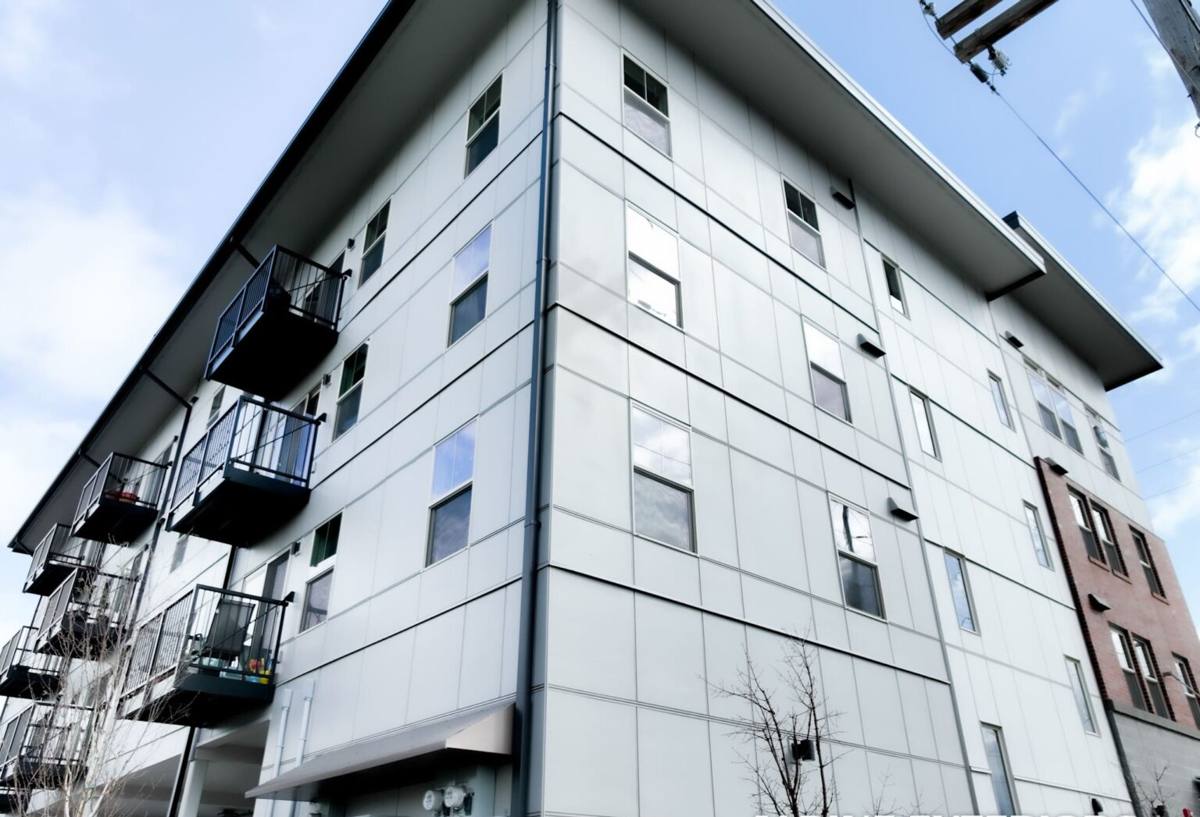
The La Conner Climate Test: Salt Air, Rain, and Moss
Three things define what siding has to survive here, and all three hit board and batten harder than a flat lap profile:
Salt air
Airborne salt off the water accelerates corrosion on fasteners and metal flashing, and it collects on siding surfaces where it can hold moisture against the wall longer than plain rainwater would. Board and batten has more exposed vertical joints than lap siding, and every one of those joints is a place where salt-laden moisture can work its way behind the cladding if it isn't detailed properly.
Driving rain
Wind off the water doesn't just drop rain straight down — it drives it sideways into walls, and vertical battens can actually funnel that water down the face of the house if the laps and gaps behind them aren't built to shed it. A profile with strong vertical lines needs a drainage plane that's just as deliberate as the visible design.
Moss season
Skagit County's damp, low-light winters are ideal growing conditions for moss and algae on the shaded and north-facing sides of a house. Organic growth on siding isn't just a cosmetic problem — over years it holds moisture against the surface and, on the wrong material, encourages rot and paint failure. Board and batten's deep shadow lines and horizontal batten tops give moss more ledges to establish on than a smooth flat panel does.
Where Board & Batten Goes Wrong When It's Installed Poorly
Most board and batten failures we see aren't material failures — they're installation failures. The profile is less forgiving than standard lap siding because it depends on a series of details working together:
- Battens fastened directly through both layers into the sheathing without allowing for movement, which cracks caulk joints and eventually the battens themselves
- No gap or rain screen behind the panel, so water that gets past the surface has nowhere to drain or dry and sits against the wall
- Butt joints between panels caulked instead of properly flashed, which works for a season or two and then opens up
- Battens installed tight to window and door trim with no room for expansion, cracking the seal right where water intrusion does the most damage
- Bottom edges left unsealed or too close to grade, wicking moisture straight into the panel
Every one of these is avoidable. None of them show up on day one — they show up two, five, or ten winters later, which is exactly why the installer's attention to detail matters more than the brand name on the product.
Why We Install James Hardie, Not Wood or Vinyl, for This Look
We install James Hardie fiber cement exclusively — we don't do vinyl board and batten, engineered wood, or primed spruce. That's a deliberate standard, not a lack of options. Board and batten in particular is a style where the material choice shows up fast in a marine climate like La Conner's.
| Material | How it behaves in La Conner's climate |
|---|---|
| Primed wood board and batten | Real wood grain, but the vertical joints and batten strips are entry points for moisture; salt air and constant damp cycles push repainting and caulk maintenance every few years, and rot at the battens is common if any gap opens |
| Vinyl board and batten | Low upfront cost and low maintenance, but the flat, thin profile rarely reads as convincingly dimensional as real battens; it expands and contracts with temperature swings and can warp or pull away from fasteners over time |
| James Hardie fiber cement | Non-combustible, engineered for wet Pacific Northwest climates, holds a factory-baked ColorPlus finish that resists the fading and chalking that salt air and UV cause, and doesn't rot or support moss growth the way wood does |
Hardie's fiber cement doesn't absorb water the way wood does and won't warp the way vinyl can, which matters most on a profile with this many joints and edges. The factory-applied ColorPlus finish also means the color coat itself is engineered to hold up outdoors, rather than relying on a field-applied paint job to do the work every few years — a real advantage in a climate that isn't kind to painted surfaces.
What a Correct Board & Batten Installation Involves
Drainage plane and rain screen gap
Before any panel goes up, the wall needs a water-resistive barrier and, in most cases on this profile, a drainage gap behind the siding so any moisture that gets past the surface has a path to drain and air to dry. Skipping this step is the single biggest reason board and batten fails early near the water.
Panel fastening and joint treatment
Panels and battens need to be fastened per Hardie's published spec — correct fastener type and spacing, blind-nailed where possible, with butt joints backed by flashing rather than caulk alone. Battens should be fastened to hit framing, not just through the panel into open air behind it.
Flashing at every penetration
Windows, doors, hose bibs, light fixtures, and any other wall penetration need proper flashing integrated with the water-resistive barrier before the siding goes on. On a vertical profile, water running down the face of the house will find any gap at a penetration faster than it would on lap siding.
Sealant and expansion gaps
Batten-to-trim and panel-to-trim joints need the gap Hardie specifies, sealed with a high-quality, paintable, flexible sealant rated for exterior use — not construction adhesive, and not caulk alone bridging a gap that's too wide or too tight.
Bottom clearance
The bottom edge of the siding needs proper clearance from grade, decks, and roof lines so it isn't sitting in standing water or splash-back, which is one of the fastest ways moisture and moss get a foothold on any siding, board and batten included.
Our Process for La Conner Board & Batten Projects
We start with a walk-around assessment specific to the house's exposure — which walls face the water and prevailing wind, which sides stay shaded and damp longest, and where the existing siding or sheathing shows signs of past moisture problems. That assessment shapes the drainage and flashing plan before a single panel is ordered.
From there, installation follows Hardie's fastening and clearance specifications exactly, with extra attention to the details that matter most in this climate: sealed and flashed joints, correct rain screen gap, and clearance at grade and roof lines. We've worked on homes throughout the La Conner area long enough to know which walls take the worst of the winter weather, and we plan the install accordingly rather than treating every elevation the same.
Living With Board & Batten Siding in Skagit County
A correctly installed Hardie board and batten job is genuinely low-maintenance, but "low-maintenance" doesn't mean "no attention." A few habits go a long way in this climate:
- Rinse salt residue and general grime off the siding once or twice a year, especially on walls facing open water
- Keep gutters and downspouts clear so roof runoff isn't sheeting down the face of the siding
- Trim back vegetation and tree cover on shaded walls to cut down on the damp conditions moss needs
- Address any moss or algae growth with a gentle wash rather than pressure-washing directly into joints and battens
- Re-caulk sealant joints if you notice cracking or gaps, rather than waiting for water intrusion to show up inside
What Board & Batten Costs to Do Right
Board and batten typically costs somewhat more than standard lap siding in the same material, mainly because of the extra labor: two layers of material, more cuts, and more fastening and sealing work per square foot. The factors that actually move the number on a given house are below.
| Factor | Why it affects the cost |
|---|---|
| Wall complexity | More corners, gables, and trim details mean more batten cuts and joints to detail correctly |
| Existing wall condition | Sheathing repair or replacement adds cost but is non-negotiable if moisture damage is found underneath old siding |
| Rain screen system | A proper drainage gap adds material and labor but is what makes this profile last in a wet climate |
| Panel and batten width | Wider batten spacing uses less material but changes the look; narrower spacing costs more in labor and fasteners |
| Color and finish | Factory ColorPlus finishes cost more upfront than field paint but remove the recurring cost of repainting |
Signs Your Board & Batten Siding Was Installed Correctly
Whether you're evaluating a bid, a finished job, or an older house you're thinking about buying, these are the details worth checking:
- A visible gap or drainage plane behind the panels rather than battens fastened flush against solid sheathing with no air space
- Butt joints backed with flashing, not just caulked over
- Consistent, hairline-width expansion gaps at trim, sealed with flexible exterior sealant
- Fasteners set per manufacturer spec, hitting framing at the battens rather than floating in open sheathing
- Clean clearance between the siding's bottom edge and grade, decks, and roof lines
- No caulking used as a substitute for proper flashing at windows, doors, or penetrations
If you're considering board and batten siding for a home in or around La Conner, we're happy to walk the property, look at what the current siding and framing are telling us, and put together a straightforward, no-pressure estimate for doing the job right the first time.