 Anacortes Siding
 Skyline's Siding Problem Isn't Like Everywhere Else
Skyline sits up and away from the water compared to the flats closer to downtown Anacortes, but that elevation doesn't buy the neighborhood much of a break from the weather that defines Skagit County exteriors. Homes here still take on salt-laden air blowing off the surrounding waterways, still catch the full brunt of driving winter rain off the Salish Sea, and still spend a good chunk of the year sitting under tree cover that keeps siding damp longer than it should be. That combination — salt, standing moisture, and shade-driven moss growth — is exactly the kind of environment that separates siding products that look fine in a showroom from siding products that actually hold up over twenty years on a real house.
We install James Hardie fiber cement siding exclusively, and Skyline is one of the areas where that decision matters most. This page covers what Skyline homes specifically need from their siding, what a correct Hardie installation looks like in this setting, and how our process is built around the conditions this neighborhood actually deals with — not generic manufacturer talking points.
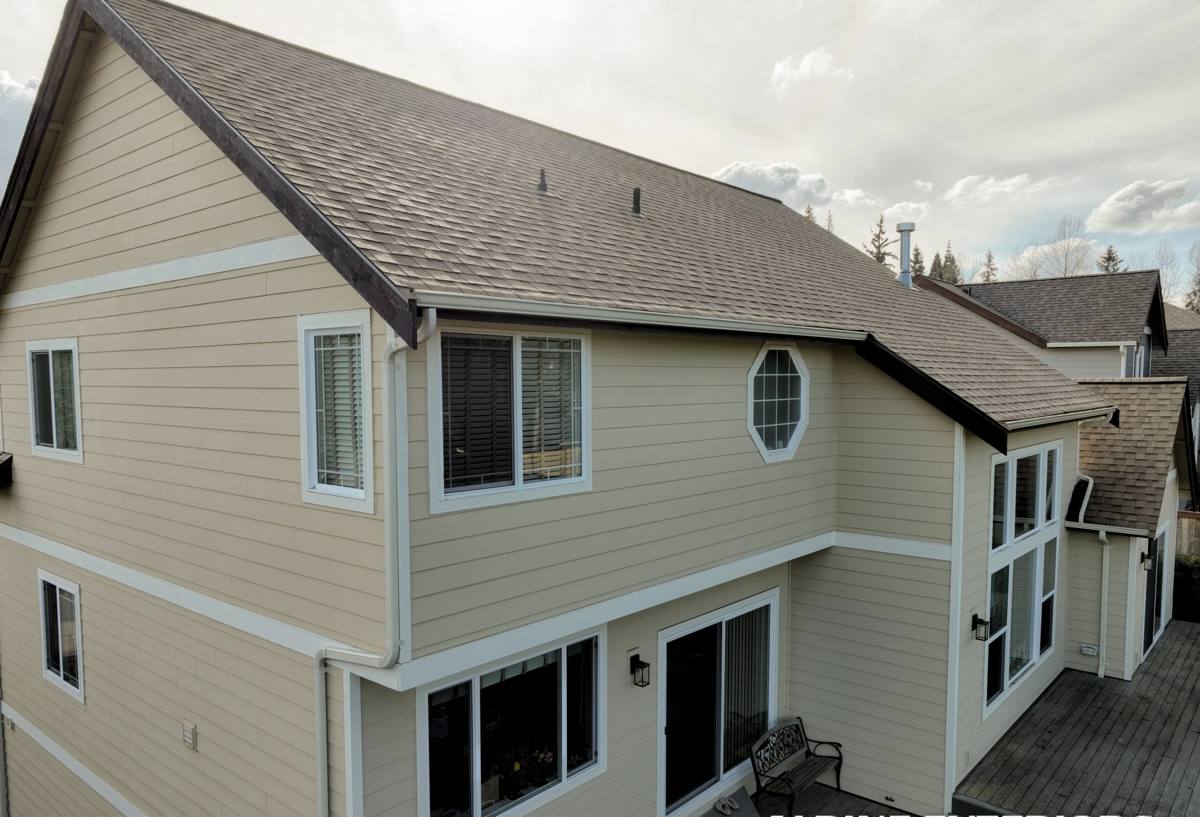
What This Climate Does to Siding Over Time
Salt Air
Anacortes sits surrounded by saltwater, and airborne salt travels further inland than most homeowners assume, especially when it's carried on wind gusts common to this part of Skagit County. Salt accelerates corrosion on any exposed metal fasteners, flashing, and trim, and it's abrasive to finishes that aren't formulated to resist it. Paint film on wood or engineered wood siding breaks down faster in this environment than manufacturers' national warranty language usually anticipates.
Driving Rain
This region doesn't just get a lot of rain — it gets rain pushed sideways by wind often enough that siding needs to shed water horizontally, not just vertically. Any siding system with weak lap coverage, thin caulk joints, or gaps at penetrations will eventually let wind-driven water behind the cladding. Once water gets behind siding in a marine climate, it doesn't dry out quickly, because the ambient humidity here rarely gives materials the sustained dry stretch they'd get in a drier climate.
Moss Season
Anacortes effectively has a moss season that runs most of the wet half of the year. Shaded, tree-covered lots — common on the more wooded lots around Skyline — hold moisture on north-facing and shaded wall sections long after sun-exposed walls have dried. Moss and algae take hold on porous or textured surfaces first, and once established, they hold water against the siding surface continuously, which is a slow but steady path to rot on any wood-based product.
Why James Hardie Fits This Environment
James Hardie fiber cement is manufactured from cement, sand, and cellulose fiber — it doesn't have the organic wood content that gives moss, algae, and rot something to feed on. That single fact matters more in a climate like Skagit County's than it does in a dry inland market, because the failure mode we're avoiding here (moisture-driven decay under shaded, damp conditions) is the specific weakness of wood-based and wood-derived siding products.
A few product-level details that matter specifically for a house in this area:
- HZ5 engineered formulation: James Hardie makes climate-specific product lines, and the HZ5 line is engineered for cold, wet Pacific Northwest conditions rather than a one-size-fits-all national spec.
- ColorPlus factory finish: a baked-on finish applied under controlled conditions holds up to UV and moisture cycling better than field-applied paint, which is relevant here because repainting a home wrapped in scaffolding during a wet Anacortes winter is not something most homeowners want to repeat every few years.
- Non-combustible core: not a moisture issue specifically, but it's part of why we standardized on Hardie — it's one less risk factor on a product we're putting on a home for decades.
- Dimensional stability: fiber cement doesn't swell and contract with moisture the way wood and some engineered wood products do, which keeps joints and caulk lines tighter over time in a climate that never really stops cycling wet and dry.
What a Correct Installation Actually Involves
Hardie siding is only as good as the installation behind it. The product is engineered to perform in wet climates, but a sloppy install defeats that engineering just as fast as it would with any other material. On a Skyline job, here's what we're actually doing at each stage:
Water Management Before Siding Goes Up
Every job starts with the water-resistive barrier and flashing details, not the siding itself. Window and door flashing has to shed water down and out, not trap it against the sheathing. Housewrap seams get lapped correctly, top over bottom, and any penetrations — hose bibs, vents, electrical — get properly flashed and sealed before a single piece of siding is hung. This is the part of the job that's invisible once it's done, and it's also the part that determines whether the siding lasts.
Rain Screen Considerations
In a climate this wet, a drainage gap behind the siding gives any moisture that does get past the cladding a path to drain and dry instead of sitting against the sheathing. We evaluate whether a furring or rain screen approach makes sense for a given wall assembly based on the home's existing structure and exposure, particularly on shaded or north-facing walls that stay damp longest.
Fastening and Clearances
James Hardie publishes specific fastener spacing, nailing patterns, and minimum clearances from grade, roofing, and decking — these aren't optional guidelines, they're what keeps the manufacturer's warranty valid and what keeps water from wicking up into the bottom edge of the siding. We hold a minimum clearance at grade and at any horizontal surface, which is a common corner that gets cut on lower-end installs and shows up years later as swelling or staining at the bottom courses.
Joints and Caulking
Butt joints get treated correctly rather than just caulked and hoped for — that includes back-priming cut ends, using the right joint treatment, and not over-relying on caulk as the only line of defense, since caulk is a maintenance item, not a permanent seal.
Our Process for a Skyline Project
- On-site assessment: we walk the exterior, check for existing moisture damage, moss buildup, and trouble spots at trim, windows, and grade level before ever talking product or price.
- Tear-off and sheathing check: once old siding is off, we can actually see the sheathing condition — this is when hidden rot or past water intrusion shows up, and we address it before closing the wall back up.
- Water barrier and flashing installation: housewrap, flashing, and any rain screen detailing get installed and inspected before siding starts.
- Hardie installation to manufacturer spec: correct fastening, clearances, and joint treatment, following James Hardie's published installation requirements for this climate zone.
- Trim, caulking, and touch-up: ColorPlus touch-up product is used at cut ends and fasteners where needed, matched to the factory finish.
- Final walkthrough: we go over the finished job with the homeowner, including what maintenance (if any) to expect going forward.
What We Commonly Find on Older Skyline Homes
Reroofs and resides in this neighborhood tend to reveal a similar pattern: wood or engineered wood siding that held up reasonably well on sun-exposed walls but broke down faster on shaded sides, moss staining concentrated on north faces and under overhangs, and soft or delaminating trim where caulk joints failed years earlier and nobody caught it. None of that is unique to Skyline — it's the predictable result of wood-based products in a wet, tree-shaded coastal climate. It's also exactly the failure pattern fiber cement is built to resist.
How Common Siding Materials Hold Up in This Climate
| Material | Moisture/rot resistance | Moss & algae susceptibility | Maintenance in this climate |
|---|---|---|---|
| James Hardie fiber cement | High — no organic content to rot | Low; factory finish resists staining better than raw or painted wood | Occasional wash; no repainting cycle with ColorPlus |
| Cedar / primed spruce | Moderate to low without diligent upkeep | High, especially on shaded walls | Regular repainting/staining and moss treatment |
| Vinyl siding | Doesn't rot, but seams and J-channels trap moisture behind it | Moderate — textured vinyl holds algae | Low, but prone to cracking/fading and doesn't stop moisture behind the wall |
| LP SmartSide / engineered wood | Depends heavily on sealed edges and correct install | Moderate; wood-based core still vulnerable if moisture reaches it | Edge sealing and caulk maintenance required |
Cost Factors for a Skyline Siding Project
Every home is different, and we won't quote a number without seeing the house, but the variables that actually move the price on a Skyline residing project are consistent:
| Factor | Why it matters here |
|---|---|
| Home size and wall complexity | More corners, gables, and trim details mean more labor and cut waste |
| Existing sheathing condition | Rot found during tear-off adds repair scope before siding can go on |
| Siding profile and Hardie product line | Lap width, shingle-style panels, and ColorPlus vs. field-painted options price differently |
| Tree cover and access | Wooded lots common around Skyline can mean more setup, staging, and debris handling |
| Trim and flashing scope | Full flashing replacement at windows and roofline adds labor but is what protects the investment |
Maintenance Checklist for Hardie Siding in This Climate
Fiber cement is low-maintenance, not no-maintenance. In a salt-air, high-moss environment, a short annual routine keeps a Hardie installation looking and performing the way it should for decades:
- Rinse the exterior annually, focusing on shaded and north-facing walls where moss and algae take hold first
- Check and re-caulk any gaps at trim, window flashing, or joints that have opened up
- Keep vegetation and tree limbs trimmed back from the wall to reduce shade and improve airflow
- Watch for staining or streaking at the bottom courses, which can indicate a clearance or drainage issue worth a look
- Touch up any chipped or scratched finish areas with matched ColorPlus touch-up product rather than leaving bare cement exposed
Why a Crew That Already Works Skyline Matters
Siding installation guidelines exist on paper, but applying them correctly on a specific house depends on understanding how that house sits relative to prevailing wind, sun exposure, and tree cover — all things that vary block to block even within one Anacortes neighborhood. A crew that's already worked homes in and around Skyline has a working sense of which walls take the worst of the weather, where moss tends to establish first, and what flashing details matter most on the home styles common to this area. That local pattern recognition doesn't replace following manufacturer spec — it's what makes sure the spec gets applied where it actually counts on a given house.
We install James Hardie siding exclusively because it's the product that holds up to what Anacortes and Skagit County actually throw at a house year after year. If you're planning a residing project in Skyline, we're happy to come take a look at your home, walk you through what we see, and put together a straightforward, no-pressure estimate — just fill out the form below to get started.