 Anacortes Siding
 Guemes Island's Siding Challenge: Salt Air, Driving Rain, and a Long Moss Season
Guemes Island sits close enough to open water that siding on the island takes a different kind of beating than siding a few miles inland in Anacortes proper. Homes here deal with near-constant airborne salt from the surrounding waters of Skagit County, wind-driven rain that hits walls sideways instead of just running off a roof, and a moss and algae season that runs longer than most of Western Washington because of the shade, humidity, and mild temperatures that never quite dry things out. Any siding material on the island has to shed water fast, resist salt-driven corrosion at fasteners and trim, and hold up to organic growth that thrives in shaded, damp conditions for much of the year.
Board and batten is a popular look on the island — it fits the cottage, farmhouse, and cabin-style architecture found in a lot of Guemes Island homes, and the strong vertical lines read well against tree lines and water views. But board and batten has more seams, more fastener penetrations, and more places for water to find a way in than a standard lap profile. On an island exposed to salt air and driving rain, getting those details right is the difference between siding that looks good for one season and siding that actually performs for decades.
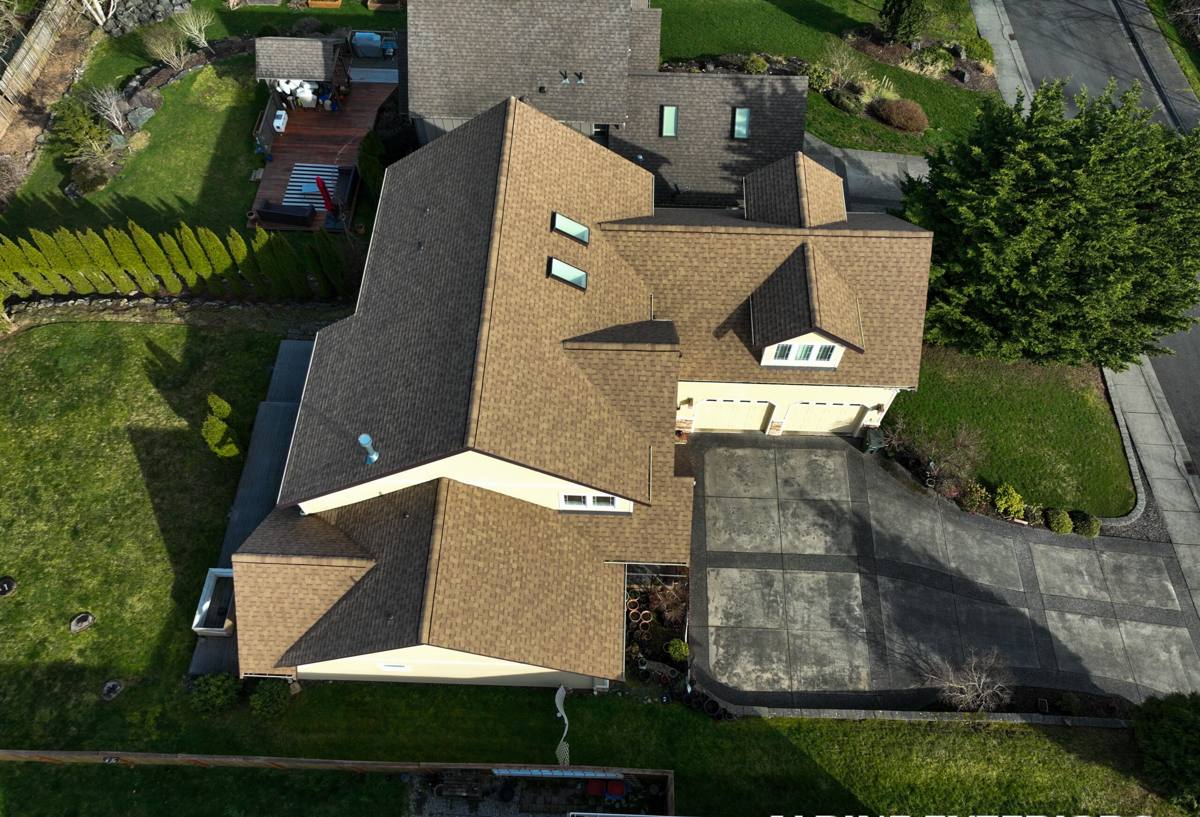
Why Board & Batten Fits Island Homes — and Where It Gets Risky
The board and batten profile — wide flat panels with narrow battens covering the vertical seams — gives a home a clean, deliberate look that works well with the more rustic and modern-farmhouse styles common on Guemes Island. It also reads well at a distance, which matters on properties with long driveways, wooded lots, or water-facing elevations where the home is often viewed from across a yard or from the water itself.
The risk is in the details most homeowners never see. Every batten is a strip of material fastened over a seam, and every fastener is a potential water entry point. In a marine climate, that means:
- Fastener heads and trim edges are more exposed to salt-laden moisture than they would be inland
- Vertical panel seams need a drainage path behind them, not just a batten covering the joint
- Shaded, damp wall sections — common under eaves and near tree cover on wooded island lots — hold moisture longer and grow moss and algae faster
- Wood-based battens and panels absorb and release moisture with the seasons, which stresses paint, caulk, and fasteners over time
None of this means board and batten is a bad choice for the island. It means the material and the installation both have to be built for this specific environment, not just for a general Pacific Northwest climate.
What a Correct Board & Batten Installation Requires
A Drainage Plane Behind the Siding
Board and batten should never be fastened directly against a flat weather-resistive barrier with no space to drain. A proper installation includes a rainscreen gap — a small air space behind the siding — so that any moisture that gets past the battens has somewhere to go besides sitting against the wall sheathing. On a site exposed to driving rain off the water, this gap is one of the details that separates siding that dries out after a storm from siding that stays damp for days.
Fastening and Batten Spacing
Battens need to be fastened into framing, not just into panel material, and fastener spacing has to follow the manufacturer's engineering, not a general rule of thumb. Over-driven or under-driven fasteners are one of the most common causes of early siding failure on board and batten jobs — either the fastener crushes the material and lets water track in, or it's left proud and never seats the batten tight enough to shed water correctly.
Trim, Flashing, and Sealant at Every Transition
Every window, door, corner, and roofline transition on a board and batten wall is a place where the vertical battens meet horizontal trim. Flashing has to be integrated correctly at those transitions — not just caulked over — because caulk alone is a maintenance item, not a permanent seal. On an island where the walls are exposed to salt air and repeated wetting, a job that relies on sealant instead of proper flashing is a job that will need rework within a few years.
Why We Install Only James Hardie for This Application
We standardized on James Hardie fiber cement siding company-wide, and board and batten applications on a site like Guemes Island are exactly why. Hardie's fiber cement panels are non-combustible, dimensionally stable, and engineered specifically for climate zones like ours through their HZ5 product line, which accounts for the freeze-thaw cycles, sustained moisture, and humidity typical of Western Washington and the San Juan/Skagit waterways.
Fiber cement doesn't absorb and release moisture the way wood-based or engineered-wood panels do, which matters directly on a board and batten wall where every seam and batten is a potential moisture point. It also carries a factory-applied ColorPlus finish, which is baked on under controlled conditions rather than field-applied — that finish holds color and resists the kind of surface breakdown that lets moss and algae get a foothold, and it comes with a stronger, transferable warranty than field-painted alternatives typically offer. We don't install vinyl, LP SmartSide, Cemplank, Allura, primed spruce, or cedar for board and batten work, not because those products have no merit, but because in a salt-air, high-moisture environment like Guemes Island, Hardie's combination of non-combustible material, factory finish, and climate-specific engineering gives homeowners the best odds of siding that still looks right in fifteen or twenty years, not just at handoff.
Our Board & Batten Process on Guemes Island
Every board and batten job starts with an on-site look at the specific wall — sun exposure, tree cover, roofline, and how exposed the elevation is to prevailing wind and rain off the water. That assessment drives decisions on batten spacing, flashing details, and where extra attention is needed, particularly on north-facing or heavily shaded walls where moss pressure is highest.
From there, the process follows the same disciplined sequence on every board and batten install:
- Remove existing siding and inspect sheathing and framing for hidden moisture damage before anything new goes up
- Repair or replace any compromised sheathing, trim, or framing found during tear-off
- Install a weather-resistive barrier and correctly lapped flashing at every window, door, and penetration
- Build out the rainscreen drainage gap so the wall assembly can dry properly behind the siding
- Install Hardie panels and battens to manufacturer fastening specifications, using corrosion-resistant fasteners suited to a marine environment
- Finish trim, corners, and transitions with proper flashing integration rather than sealant alone
- Walk the completed job with the homeowner and address any punch-list items before calling it done
Because Guemes Island is only reached by ferry, material staging and scheduling take real planning — we account for ferry logistics, tide-dependent site access on some properties, and the general reality that a forgotten piece of trim isn't a quick supply-run away. Jobs on the island are planned with that in mind from day one, not figured out mid-project.
Cost Factors for Board & Batten Siding on Guemes Island
Board and batten costs vary by home size, wall complexity, and site access, but a few factors specifically affect island projects more than a typical Anacortes mainland job:
| Factor | Why It Matters on Guemes Island |
|---|---|
| Ferry-dependent material delivery | Material and crew scheduling has to account for ferry sailings, which affects sequencing and lead time |
| Site exposure to wind and salt air | Higher-exposure elevations may need additional flashing and fastener detailing |
| Tear-off condition | Homes with prior wood or engineered-wood board and batten often reveal moisture damage in sheathing once old siding comes off |
| Access and staging | Wooded or waterfront lots with limited driveway access can affect equipment staging and labor time |
| Batten density and trim detail | Wider batten spacing costs less material but a more traditional, tighter batten look adds material and install time |
We give straight numbers based on the actual wall conditions and scope, not a generic per-square-foot estimate that ignores site realities. Ferry logistics and site exposure are folded into planning up front so there are no surprises mid-project.
Why a Crew That Already Works Guemes Island Matters
A contractor who hasn't worked the island before is learning the ferry schedule, the material logistics, and the site-access realities on your project's dime. A crew that already works Guemes Island has that figured out — sailings are planned around, materials are staged efficiently, and the crew isn't guessing at how a shaded, tree-covered lot or a waterfront elevation behaves through a Skagit County winter.
There's also a practical trust factor. Island homeowners are relying on a crew showing up when they say they will, working efficiently while they're on-site, and not needing multiple follow-up trips for things that should have been caught the first time. A crew with island experience plans the job — permitting, material delivery, crew scheduling — around the fact that Guemes Island isn't a five-minute run from the shop.
Maintaining Board & Batten Siding in a Marine Climate
Even correctly installed Hardie board and batten siding benefits from basic seasonal attention on an island site. A simple annual checklist covers most of what matters:
- Rinse salt residue and debris off the siding surface, especially on wind- and water-facing elevations
- Check for moss or algae buildup in shaded areas and remove it before it holds moisture against the surface
- Inspect caulking and sealant at trim and window transitions and have any cracked or failing sealant addressed
- Look for gutter overflow or downspout issues that could be dumping extra water onto a wall section
- Trim back vegetation and tree branches that are keeping a wall section shaded and damp longer than necessary
None of this is heavy maintenance — it's the kind of upkeep that keeps a correctly installed system performing the way it's designed to, rather than fighting problems that a properly built wall assembly shouldn't have in the first place.
If you're planning a board and batten project on Guemes Island, we're happy to take a look at your home and walk through what the site actually needs — no pressure, no generic estimate. Use the form below to request a free assessment.