 Anacortes Siding
 Building a Deck That Actually Holds Up in Flounder Bay
Flounder Bay sits close enough to the water that every deck we build there has to answer to conditions a lot of decking products and installation shortcuts were never designed for. Salt-laden air off the bay accelerates corrosion on anything metal. Driving rain off the Sound finds every gap in flashing and fastening. And Skagit County's long, damp shoulder seasons mean moss and algae get months of uninterrupted growing time on any deck surface that doesn't shed water and dry out quickly. A deck built to a generic inland spec will show its age in Flounder Bay years before it should.
This page is about deck building specifically for that setting — what fails first, what a correctly built deck looks like out here, and how we approach the job differently because of it.
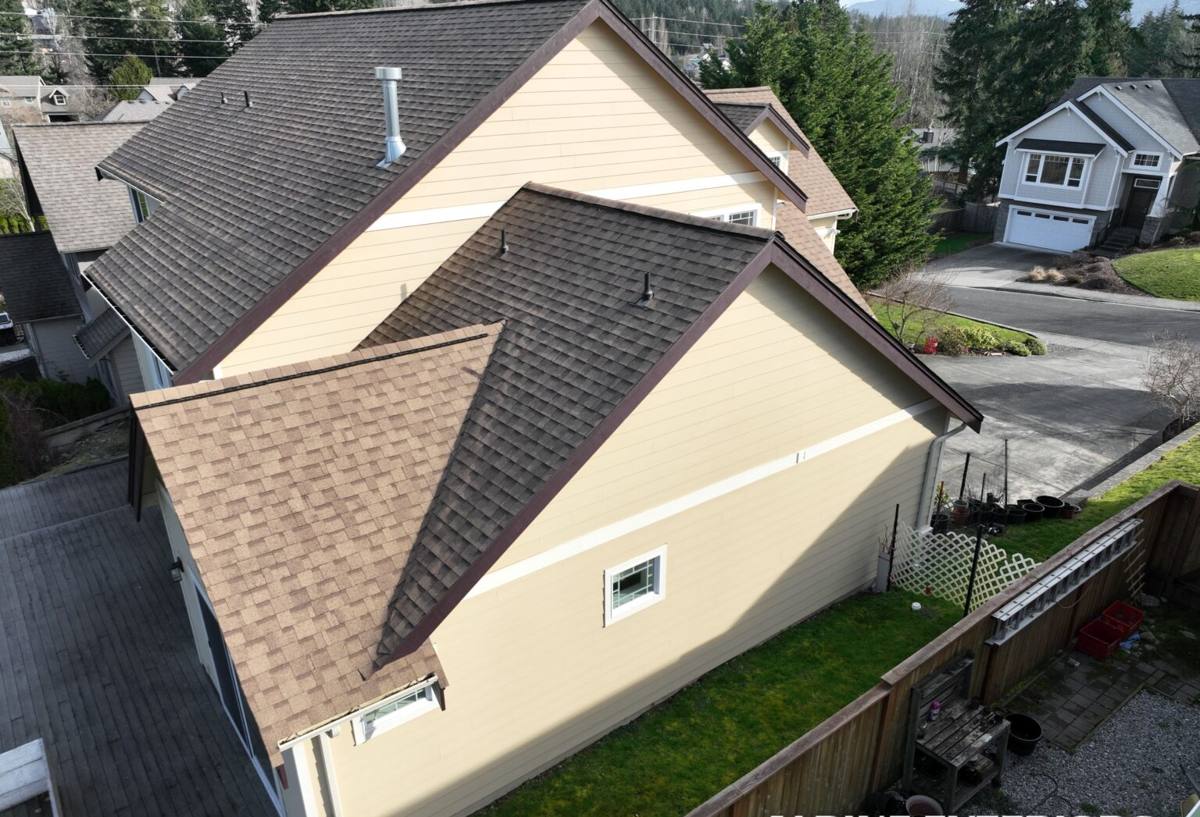
Where Waterfront Exposure Attacks a Deck First
Fasteners and Structural Hardware
Salt air doesn't need direct ocean spray to do damage — airborne salt drifts and settles on exposed metal even a few blocks from the shoreline, and Flounder Bay properties are often right in that zone. Standard electro-galvanized screws, joist hangers, and post bases start rusting within a few seasons in this environment. Rust-streaked decking and a hanger that's lost half its zinc coating aren't cosmetic issues; they're a structural clock running down.
Ledger Board and Wall Connection
Every deck attached to a house has a ledger board bolted to the framing, and that connection point is the single most common source of rot and water damage in residential decks — waterfront or not. In a climate with as much driving, wind-blown rain as Anacortes gets, a ledger that isn't flashed correctly will let water track behind the siding and into the rim joist. Because we're a siding contractor first, this is the part of deck building we pay the most attention to: the deck-to-house connection has to integrate with the existing wall assembly, not just get bolted through it.
Moss, Algae, and Board Surface Wear
Skagit County's moss season runs long — shaded, north-facing, or low-airflow deck areas can stay damp for months at a stretch. Moss on a deck surface isn't just unattractive; it holds moisture against the board, and on wood decking that means accelerated rot underneath a surface that looks fine from a few feet away. It's also a genuine slip hazard on stairs and landings, which matters more on a sloped waterfront lot than a flat one.
Choosing Decking Material for a Flounder Bay Property
There's no single "right" decking material for every home — it depends on budget, how much upkeep an owner wants to take on, and how exposed the deck is to sun, shade, and moisture. Here's how the common options actually perform in this specific climate:
| Material | Moisture & Moss Behavior | Maintenance | Typical Lifespan Here |
|---|---|---|---|
| Pressure-treated lumber | Absorbs water, prone to surface moss/algae if not cleaned | Needs re-sealing every 1-2 years to perform well | 15-20 years with upkeep |
| Cedar | Naturally rot-resistant heartwood, but still absorbs moisture; moss forms on shaded boards | Regular cleaning and periodic finish renewal | 15-25 years with upkeep |
| Capped composite | Sheds water, resists moss adhesion better than wood, doesn't rot | Occasional wash-down, no sealing/staining | 25-30+ years, manufacturer-warrantied |
| PVC/vinyl decking | Fully water-resistant, very poor food source for moss/algae | Lowest of the group | 25-30+ years, manufacturer-warrantied |
We'll walk any homeowner through this honestly rather than push one product. Composite and PVC decking cost more up front but make sense for owners who don't want a recurring maintenance chore in a climate that punishes neglected wood. Cedar and pressure-treated lumber cost less initially and can look great, but only if the owner is realistic about the cleaning and sealing schedule a wet climate demands. There isn't a wrong answer here — there's a wrong mismatch between the material and how much maintenance someone actually intends to do.
What a Correctly Built Deck Includes
Regardless of decking material, the parts that determine whether a deck lasts in Flounder Bay's climate are mostly underneath the surface. A deck built to hold up here should include:
- Ledger board flashing that integrates with the house's existing weather-resistive barrier and siding — not just caulk at the bolt holes
- Stainless steel or heavy hot-dip galvanized fasteners and structural hardware, rated for the exposure the site actually gets
- Joist tape or a butyl flashing membrane on top of every joist to keep water out of end grain and fastener penetrations
- Footings set to the frost depth and bearing requirements the local building code calls for, sized for the actual soil on site
- Proper drainage slope away from the house on both the ledger connection and the decking surface itself
- Gaps and airflow underneath the deck sufficient to let it dry out between rain events, not trap moisture against framing
- Stair and landing surfaces detailed to shed water quickly, since these are where moss creates the most slip risk
Skip any one of these and the deck may look fine for a few years while the damage builds underneath — which is exactly how a lot of waterfront-area decks end up needing major repair well ahead of schedule.
Permits and Waterfront Site Considerations
Anacortes and Skagit County both have permitting requirements for new deck construction, and proximity to the water can bring additional review depending on the property — shoreline and critical areas regulations sometimes apply to work near the bay, on top of standard building permit requirements. We handle the permit application and inspection process as part of the job rather than leaving it to the homeowner to sort out, and if a property's specific location triggers additional shoreline review, we'll flag that early rather than after the framing is up.
Sloped or elevated lots near the bay also change the structural picture — footing depth, post height, and lateral bracing all need to account for the actual grade and soil conditions on site, not a flat-lot assumption.
Our Process for a Flounder Bay Deck
1. On-Site Assessment
We look at the house's existing siding and wall assembly where the deck will attach, the grade and drainage of the lot, sun and shade exposure, and how exposed the site is to prevailing wind and rain. This is what drives our material and hardware recommendations — not a generic default spec.
2. Design and Material Selection
We go over decking material, railing style, and layout with the homeowner, including the honest maintenance trade-offs for each option, and settle on a plan and a straightforward written estimate before any work starts.
3. Permitting
We submit for the required permits and handle the inspection scheduling that goes with them.
4. Structural Build and Ledger Integration
Footings, framing, and the ledger-to-house connection get built first and get inspected before decking goes down. This is the stage that matters most for long-term performance and the one that's easiest to shortcut if a crew doesn't understand waterfront wall assemblies.
5. Decking, Railing, and Finish
Surface material and railing go on last, with attention to drainage slope and airflow underneath.
6. Walkthrough
We walk the finished deck with the homeowner, including a straightforward explanation of what maintenance schedule fits the material that was installed.
Living With a Deck Through Skagit County's Moss Season
Even a well-built deck needs some seasonal attention in this climate. A realistic maintenance rhythm for a Flounder Bay deck looks like periodic sweeping and washing to keep organic debris from sitting on the surface, prompt attention to any shaded areas where moss gets a foothold, and — for wood decking — staying on top of the sealing or staining schedule rather than letting it lapse for a few seasons. Composite and PVC decking cut this workload down significantly but don't eliminate the need for an occasional wash-down. None of this is complicated, but it's the difference between a deck that reaches its full lifespan and one that starts needing board replacement a decade early.
Why a Crew That Already Works Flounder Bay Matters
Deck building isn't unique to the coast, but building one that lasts in a salt-air, high-rainfall waterfront climate takes a different set of defaults than a crew used to inland, drier conditions brings to the job. A contractor who already works this area knows to spec stainless or heavy-galvanized hardware as standard rather than an upsell, treats ledger flashing as non-negotiable, and has already seen which decking materials hold up on shaded, damp Flounder Bay lots versus which ones struggle. As a siding contractor, we also bring a level of attention to the ledger-to-wall connection that a deck-only crew sometimes treats as an afterthought — and that connection is where most deck water damage actually starts.
If you're planning a new deck or replacing one that's showing rot, corrosion, or moss buildup, we're happy to take a look and give you a straightforward, no-pressure estimate. Use the form below to get started.