 Anacortes Siding
 Why Fidalgo Island Roofs Wear Out Differently
A roof on Fidalgo Island doesn't age the same way a roof twenty miles inland does. Being surrounded by saltwater, sitting in the path of driving rain off the Strait, and going months at a time under heavy tree shade all put a different kind of stress on shingles, flashing, and fasteners than you'd see in a drier, more sheltered part of Skagit County. A roof replacement here has to be planned around those specific conditions, not just installed to a generic spec sheet.
Salt Air and Corrosion
Airborne salt doesn't just affect homes right on the water — it travels with the wind across most of the island. Over years, that salt-laden moisture accelerates corrosion on exposed metal: nail heads, drip edge, valley flashing, and vent stacks. When corrosion-resistant fasteners and flashing aren't used from the start, you end up with rust streaks, loosened shingles, and leak points years before the roofing material itself has actually worn out.
Driving Rain and Wind-Driven Moisture
Anacortes gets weather that comes in sideways as often as it comes straight down. Driving rain finds its way under poorly lapped shingles, around under-sealed penetrations, and into any gap in the underlayment. A roof system built for calmer inland weather often isn't detailed tightly enough to handle wind-driven rain hitting a roof face directly.
The Long Moss Season
Between the marine humidity and the shaded, tree-lined lots common on the island, moss has a long growing season here — often close to year-round in shaded spots. Moss holds moisture against the roofing material, lifts shingle edges, and works its way under laps over time. A roof replacement that doesn't account for airflow and drainage is setting up the next moss problem before the old one is even gone.
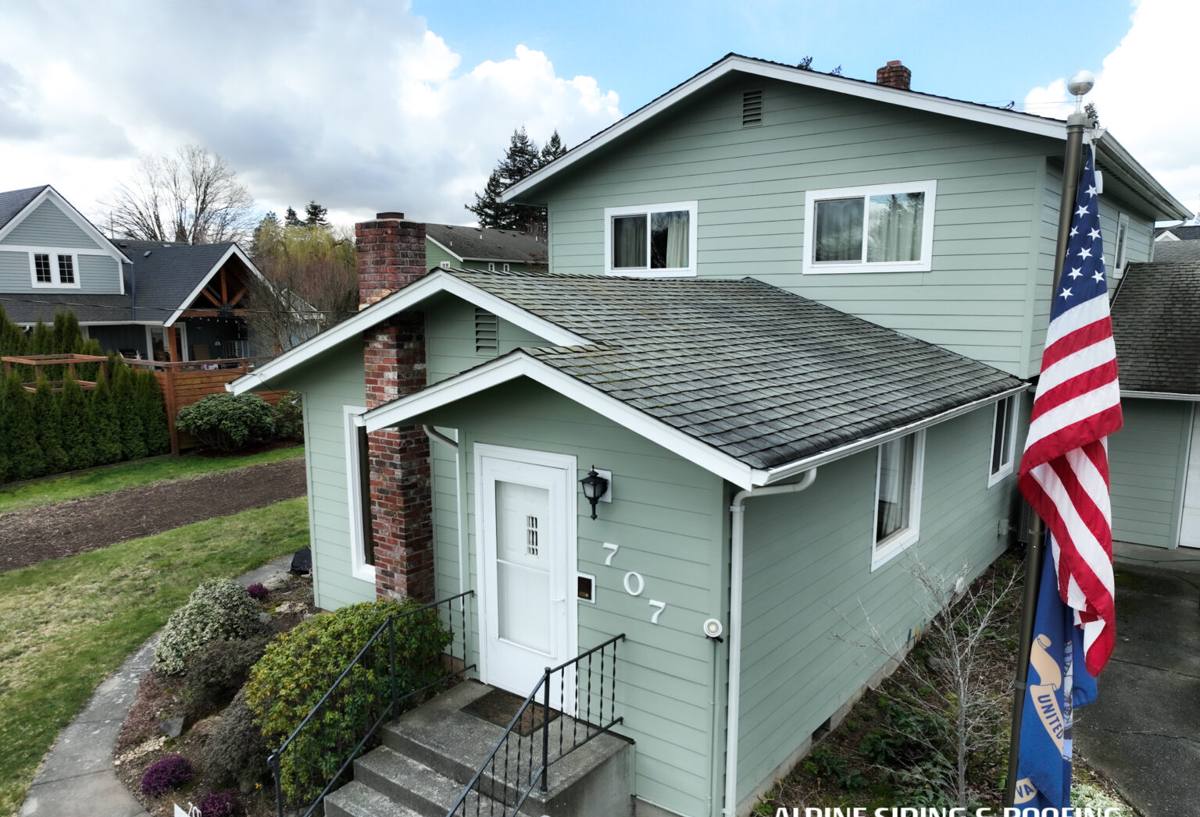
Signs a Fidalgo Island Roof Needs Replacement, Not Another Repair
Not every roof problem here means a full replacement — but on a coastal roof, deferred repairs tend to compound faster than they would elsewhere. These are the signs worth taking seriously:
- Granule loss heavy enough that you're finding grit in gutters or downspouts regularly
- Shingles that are cupping, curling at the edges, or cracking when you look at them from the ground
- Rust staining below nail heads, vents, or flashing
- Moss or dark algae streaking that keeps coming back within a season or two of cleaning
- Soft spots, sagging, or visible deck movement underfoot on the roof
- Daylight visible through the roof deck from inside the attic
- Leaks that show up in more than one location, or after every heavy wind-driven rain
- A roof that's at or past the manufacturer's expected service life for its material
If you're only seeing one or two of these and the roof is otherwise sound, a targeted repair may still make sense. If several are showing up together, that's usually a sign the underlying materials — not just the surface — are failing.
What a Correct Roof Replacement Involves Here
Tear-Off and Deck Inspection
A proper replacement starts with a full tear-off, not a layover. That's the only way to actually see the roof deck — and on an older Fidalgo Island home, it's common to find sections of sheathing that have taken on moisture damage from years of slow leaks or trapped humidity under moss. Any soft or delaminated decking needs to be replaced before new material goes down; skipping that step just hides a problem under a new roof.
Underlayment and Water Barrier
Given how much wind-driven rain this area sees, underlayment choice matters more than it would in a drier climate. Self-adhered ice-and-water barrier at eaves, valleys, and around every penetration gives the roof a real second line of defense if wind ever drives rain up under the shingle laps — which it will, eventually, in a coastal storm.
Flashing and Fasteners Rated for Salt Air
This is where a lot of roofs on the island fail early. Standard fasteners and flashing that aren't rated for a marine environment will corrode faster here than the roofing material around them. Using corrosion-resistant flashing and fasteners at every valley, chimney, wall intersection, and vent isn't an upgrade — for this location, it's the baseline for a job that's supposed to last.
Ventilation
Balanced intake and exhaust ventilation does two jobs at once: it keeps the attic dry, which protects the deck and insulation, and it keeps the underside of the roofing material cooler and drier, which slows moss and algae growth from underneath. A lot of moss problems that seem like a roofing material issue are actually a ventilation issue.
Choosing a Roofing Material for a Salt-Air, High-Moss Climate
There's no single "correct" roofing material for every Fidalgo Island home — it depends on the roof's exposure, the home's style, shade cover, and budget. Here's how the common options actually perform in this specific climate:
| Material | Moss & Algae Resistance | Salt-Air Durability | Maintenance | Typical Upfront Cost |
|---|---|---|---|---|
| Asphalt composition shingle | Moderate — better with algae-resistant granules | Good, if fasteners/flashing are corrosion-rated | Periodic moss/debris removal | Lower |
| Standing seam metal | High — sheds moisture, little for moss to grip | Very good with coastal-rated coatings and fasteners | Low | Higher |
| Cedar shake | Low without diligent upkeep — retains moisture | Fair — needs consistent maintenance near salt air | High | Higher |
| Synthetic composite shingle/shake | Good — engineered to resist moisture retention | Good | Low to moderate | Moderate to higher |
Our general standard on the island: whatever material a homeowner picks, we don't cut corners on the flashing, fasteners, and ventilation underneath it. A premium shingle installed with standard hardware in a salt-air environment will still fail at the fasteners before the shingle itself wears out — the material is only as good as what's holding it down.
What Affects the Cost of a Roof Replacement
We won't quote a number without seeing the roof, but the main cost drivers on a Fidalgo Island job are consistent:
| Factor | Why It Matters |
|---|---|
| Roof size and pitch | Steeper roofs take longer and need more safety setup, which affects labor |
| Number of existing layers | Removing multiple old layers adds tear-off time and disposal cost |
| Deck condition | Rot or soft sheathing found during tear-off means added repair before install |
| Material chosen | Asphalt, metal, cedar, and synthetic products span a wide cost range |
| Roof complexity | Valleys, dormers, chimneys, and skylights all add flashing detail work |
| Access and staging | Tight lots, tree cover, or difficult truck access can add setup time |
The honest answer for most homes is that the price falls somewhere in the same broad range as other Skagit County roof replacements of similar size — the specifics above are what move a given job up or down within that range.
Our Roof Replacement Process
- On-site inspection — we look at the current roof, attic ventilation, and any signs of moisture damage before recommending replacement over repair.
- Written estimate — a clear scope of work and material options, no pressure to decide on the spot.
- Scheduling and material order — we plan around weather windows, since a tear-off needs a dry stretch to do right.
- Tear-off and deck inspection — old material removed, deck checked and repaired where needed.
- Underlayment, flashing, and fastener installation — using corrosion-resistant hardware suited to a marine climate.
- Roofing material installation — installed to manufacturer spec, with attention to ventilation and drainage detailing.
- Final walkthrough — we go over the finished roof and cleanup with the homeowner before calling the job done.
Moss Prevention and Long-Term Care After Replacement
A new roof on Fidalgo Island still needs some seasonal attention, especially on shaded sections of the property. Keeping gutters and valleys clear of needles and debris, trimming back overhanging branches where practical, and having moss growth addressed before it spreads all extend the life of the new roof. A roof installed with proper ventilation and drainage will resist moss far longer than one without it, but "moss-resistant" doesn't mean "moss-proof" in a climate this wet and shaded — a little seasonal upkeep goes a long way.
Why It Matters to Hire a Crew That Already Works Fidalgo Island
A roofing crew that hasn't worked in a marine, high-moss climate can still do competent work — but they're often learning the local conditions on your roof instead of already knowing them. A crew that's done work across Anacortes and the rest of Fidalgo Island already knows which fasteners hold up to the salt air, where driving rain tends to find weak points on local roof designs, and how much ventilation a shaded roof actually needs to keep moss from coming right back. That familiarity shows up in fewer callbacks and a roof that's actually built for the place it's on, not just installed to a generic standard.
If your roof is showing its age or you're just not sure whether it needs repair or full replacement, we're happy to take a look and give you a straight answer. Request a free, no-pressure estimate using the form below — there's no obligation, and no pressure to decide on the spot.