 Anacortes Siding
 Why Roofs on Fidalgo Island Wear Differently
A roof on Fidalgo Island doesn't age the same way one does forty miles inland. Being surrounded by Puget Sound means salt-laden air is a constant, and it works on metal flashing, fasteners, and vent stacks year-round, not just during storms. Add in driving rain that comes sideways off the water during winter systems, and every seam, lap, and penetration on the roof gets tested repeatedly in ways a dry-climate roof never experiences. Then there's the tree cover common to Anacortes neighborhoods — shade plus moisture equals moss, and moss is patient. It doesn't just sit on the surface; given enough time it works into shingle granules and holds water against the roof deck long after the rain stops.
None of this means Fidalgo Island roofs fail faster than average. It means the failure points are specific and predictable, and a repair that doesn't account for them is a repair that comes back in a year or two.
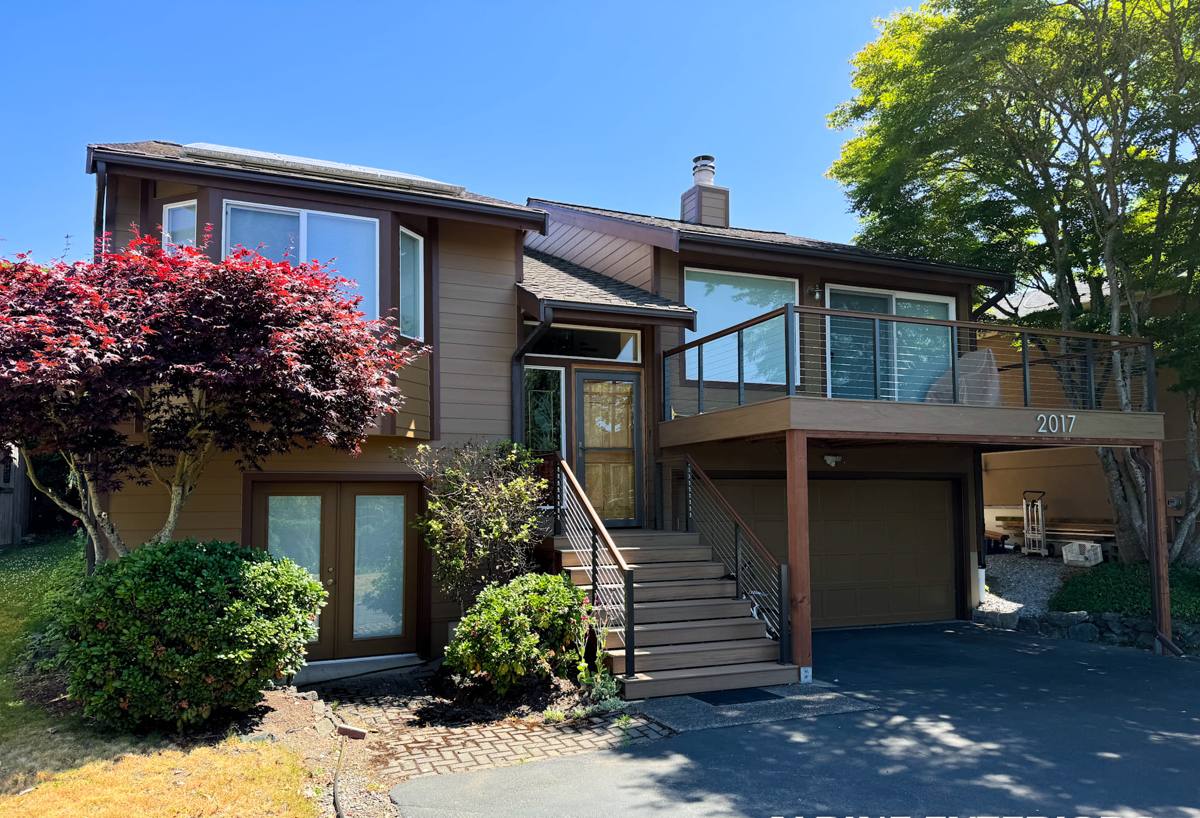
Signs Your Roof Needs Repair, Not a Full Replacement
Most roofs don't fail all at once. They show localized problems first, and catching those early is what keeps a repair a repair instead of turning into a replacement. Here's what we tell homeowners to watch for between inspections:
- Dark streaking or thick moss growth concentrated on north-facing or shaded slopes
- Granules collecting in gutters or at downspout outlets
- Shingles that look cupped, curled at the edges, or lifted after a windstorm
- Water stains on interior ceilings, especially near chimneys, skylights, or where a roof line meets a wall
- Rusty streaks below flashing or nail heads
- Soft or spongy spots when walking the roof (a sign the decking underneath may be compromised)
- Gaps or cracked caulk around vent boots and pipe penetrations
Any one of these on its own is often a straightforward repair. Several at once, especially combined with an older roof, is when we start talking honestly about whether repair is still the right call.
The Most Common Roof Repair Calls We Get on Fidalgo Island
Moss and Organic Growth
Moss is the most visible issue and the most misunderstood. Left alone, it lifts shingle edges as it grows, holds moisture against the roofing material, and accelerates granule loss. A proper repair addresses the moss itself, physically removes it rather than just treating it chemically, and looks at why that section of roof stays damp — tree overhang, poor airflow, or shade that never lets the deck dry out.
Flashing and Transition Leaks
Where a roof meets a chimney, wall, skylight, or dormer is almost always where a leak starts, not in the open field of shingles. Flashing takes the brunt of driving rain and thermal movement, and on older homes it's often the first thing to fail — either from age, from a rushed original installation, or from corrosion in the marine air.
Wind-Lifted or Cracked Shingles
Storms off the Sound can lift shingle tabs without tearing them off completely, which is worse in some ways than losing them outright — a lifted shingle that reseals wrong lets water track sideways under the row above it, sometimes showing up as a leak nowhere near the actual damage.
Corroded Fasteners and Metal Components
Nail heads, vent flashing, and drip edge in a salt-air environment corrode faster than manufacturer specs assume for a general climate. We see this most on roofs 12-plus years old that were installed with standard fasteners rather than corrosion-resistant hardware.
What a Proper Roof Repair Actually Involves
A repair done right is more than caulk and a shingle swap. On every repair we do, the process includes:
- Pulling back enough surrounding material to see the real extent of the damage — not just patching what's visible from the ground
- Checking the decking underneath for soft spots or rot before anything new goes down
- Replacing underlayment in the repaired section, not just the top layer
- Correcting the flashing detail if that's the underlying cause, not just resealing the symptom
- Matching shingle type, color, and exposure as closely as possible so the repair doesn't stand out
- Sealing and finishing to the same standard as new work, not a patch job that reads as temporary
Skipping the decking check is the most common shortcut in the industry, and it's the one that causes the most callbacks — a new shingle over a soft deck still leaks, it just takes longer to show.
Our Roof Repair Process
We keep this straightforward on purpose. Homeowners are usually dealing with a leak or a worry, not a project they want to manage.
- Inspection: We get on the roof, not just look at it from the ground, and document what we find.
- Written scope and estimate: You get a clear explanation of what's wrong, what we recommend, and what it costs — no vague line items.
- Materials matched to your existing roof: Wherever possible, repairs blend in rather than becoming a visible patch.
- The work itself: Most repairs are completed in a single day, weather permitting.
- Cleanup: Magnetic sweep for nails, debris hauled off, gutters checked for anything that fell in during the work.
- Follow-up: We stand behind the work and want to hear from you if anything doesn't perform as expected.
Repair or Replace? How We Help You Decide
We don't default to recommending a full roof when a repair will hold. At the same time, we won't repair a roof that's genuinely past the point where repair makes financial sense. Here's how we weigh it:
| Factor | Points Toward Repair | Points Toward Replacement |
|---|---|---|
| Roof age | Under 15 years | Nearing or past manufacturer's rated life |
| Extent of damage | Localized — one slope, one flashing detail | Spread across multiple areas or slopes |
| Decking condition | Solid, no rot found | Soft or rotted decking in multiple spots |
| Moss/organic growth | Surface level, recent | Long-term growth with granule loss underneath |
| Prior repair history | First or second repair on this roof | Repeated repairs in the same area |
| Underlayment condition | Intact where exposed | Brittle, torn, or original underlayment on an old roof |
When a roof lands in the middle of that table, we'll tell you both options honestly, including which one we'd choose if it were our own house.
Materials We Use for Roof Repairs
Matching materials on a repair matters more here than in a dry climate, because a mismatch in material or fastener type at a repair seam is a future leak point. On most Fidalgo Island homes we're working with asphalt composition shingles, since that's the majority roofing type in the area, and we match weight, color, and profile as closely as the original manufacturer's product allows. Where a shingle line has been discontinued, we choose the closest current equivalent and place it where it blends best rather than forcing an exact match that doesn't exist anymore.
For flashing and metal components, we use corrosion-resistant materials as standard practice given the marine air, not as an upgrade option — a repair that uses standard-grade fasteners or flashing in this environment is a repair we'd be doing again sooner than necessary. That's a maintenance and longevity decision, not a brand preference, and we'll explain the trade-off in plain terms if a homeowner asks why we spec it that way.
Where Roof Meets Siding: Why the Whole Envelope Matters
Because we work on siding as much as roofing, we see the failures that happen specifically at the boundary between the two — roof-to-wall flashing (also called kickout flashing), fascia and soffit condition, and how water is directed away from siding once it leaves the roof. A roof repair that ignores how water sheds onto the wall below it is an incomplete repair. This is a detail that's easy to miss for a crew that only does one trade, and it's one of the more common causes of hidden rot we find at siding replacement — water that was never a roof leak at all, just a roof edge dumping water into a wall assembly for years.
Why It Matters to Hire a Crew That Already Works Fidalgo Island
Roof repair isn't a generic service, and a crew that only occasionally works this part of Skagit County doesn't carry the same working knowledge as one that's on Fidalgo Island roofs regularly. That familiarity shows up in practical ways: knowing which neighborhoods run heavier moss because of tree cover and slope orientation, understanding how City of Anacortes permitting and any applicable HOA guidelines apply to exterior work, and scheduling around the realistic weather windows this area actually gets rather than a generic Pacific Northwest forecast. It also means showing up with the right materials the first time, because we already know which fasteners and flashing hold up here and which don't.
If you're dealing with a leak, visible moss, or just want an honest read on where your roof stands, we're happy to take a look. The estimate is free, there's no pressure attached to it, and you'll get a straight answer about whether you're looking at a repair or something bigger — just fill out the form below to get started.