 Anacortes Siding
 Fiber Cement Siding Built for Burlington's Skagit Valley Climate
Burlington sits low in the Skagit River valley, a few miles inland from the tideflats and marine air that move through this part of Skagit County. That combination of low elevation, valley fog, and proximity to open water gives Burlington homes a specific set of siding problems: damp air that lingers longer than it does up on higher ground, driving rain that comes in sideways during fall and winter storms, and a moss season that can stretch from October well into spring. Siding here isn't just cosmetic — it's the first line of defense against moisture that wants to sit against your walls for months at a time.
We install James Hardie fiber cement siding exclusively, and we've done enough work in Burlington and the surrounding Skagit Valley to know what actually holds up here versus what looks fine in a showroom and starts failing after a few wet winters.
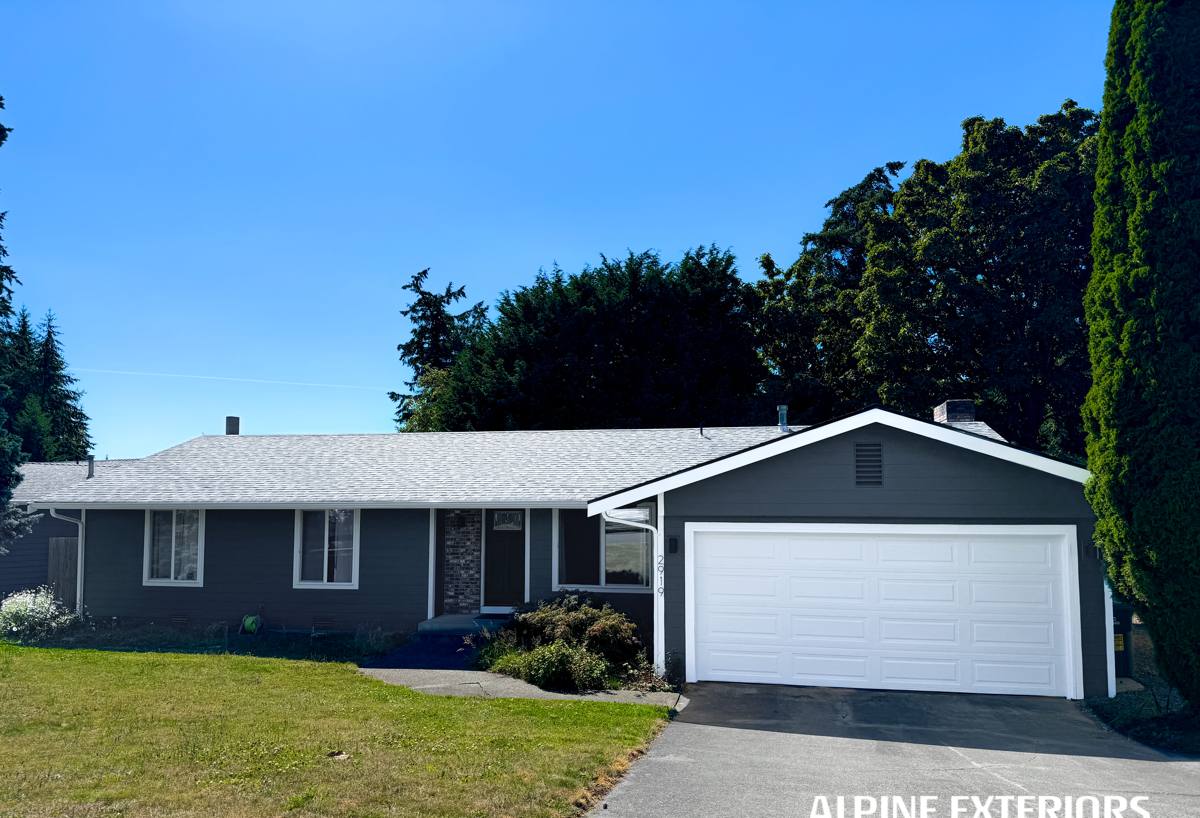
Why Burlington's Climate Is Harder on Siding Than It Looks
Valley Moisture and Fog
Low-lying valley towns like Burlington trap moisture differently than homes up on a hillside or ridge. Morning fog is common, humidity lingers on north-facing walls, and anything that absorbs water — bare wood, some engineered wood products, poorly sealed seams — stays damp longer than it would in a drier or breezier location. That extended dampness is exactly what feeds moss, mildew, and slow rot.
Driving Rain
Skagit County gets its share of wind-driven storms off the Sound, and Burlington's open valley exposure means rain doesn't just fall straight down — it gets pushed sideways into wall assemblies. Siding with weak seams, poor flashing details, or a finish that isn't engineered for sustained wet exposure will show it first at the joints, corners, and anywhere trim meets the field.
Long Moss Season
Moss doesn't just grow on roofs here. On siding, it takes hold anywhere shaded, damp surfaces stay wet — under eaves, behind shrubs, on north walls that don't get much sun. Left alone, moss holds moisture against the siding surface, which accelerates whatever weakness is already there. A siding product and finish that resists moisture absorption in the first place makes moss a surface-cleaning issue instead of a structural one.
Why We Only Install James Hardie in Burlington
We've made a deliberate decision as a company to install one product system: James Hardie fiber cement siding. We don't install vinyl, LP SmartSide, Cemplank, Allura, primed spruce, or cedar. That's not a marketing position — it's based on what we've seen hold up over years in exactly this kind of climate.
- Non-combustible material — fiber cement doesn't feed a fire the way wood-based products can.
- Engineered for wet climates — Hardie's HZ5 product line is formulated for the kind of moisture cycling the Pacific Northwest sees, not a generic national spec.
- Factory-applied ColorPlus finish — baked on at the plant under controlled conditions, which holds up far better against sustained damp exposure than field-applied paint on other products.
- Dimensionally stable — fiber cement doesn't swell, cup, or delaminate the way wood-based composites can when they take on moisture repeatedly over a Skagit Valley winter.
- Strong transferable warranty — backed by a manufacturer with decades of track record, not a smaller competitor still building theirs.
Other products on the market aren't garbage, and we're not going to pretend otherwise. Vinyl is inexpensive and easy to install. Engineered wood siding can look good going up. Cedar has real curb appeal for the right buyer. But each of those comes with a trade-off — moisture sensitivity, maintenance burden, seam vulnerability, or a shorter real-world lifespan in exactly the wet, mossy conditions Burlington deals with every year. We'd rather install one product correctly than juggle five and cut corners on all of them.
What Correct Fiber Cement Installation Actually Involves
Fiber cement siding is only as good as the install behind it. A rushed or undertrained crew can put Hardie boards on a wall and have them fail early — not because the product is bad, but because the details that keep water out were skipped. In a valley climate like Burlington's, those details matter more, not less.
What we check and do on every job
- Full inspection of the wall sheathing and existing moisture barrier before anything new goes up — we don't cover up a problem that's already there.
- Correct weather-resistive barrier installation, lapped and sealed per manufacturer spec, not just stapled up and covered.
- Proper flashing at every window, door, and roofline intersection — this is where most siding failures actually start.
- Manufacturer-specified fastening, spacing, and clearance (including ground clearance and butt joint treatment) so the board can move with temperature and moisture changes without cracking finish or opening seams.
- Factory-cut and factory-primed edges used wherever possible, with field cuts properly sealed, since exposed raw edges are where moisture intrusion starts.
- Caulking and sealant only where Hardie's install guide calls for it — over-caulking traps moisture just as badly as under-caulking lets it in.
How Our Process Works for Burlington Homeowners
- On-site assessment. We walk the exterior, check current siding condition, look at trim, flashing, and any moisture staining or soft spots, and talk through what you're trying to solve — a full replacement, storm damage, or planning ahead.
- Written estimate. You get a clear scope: what's being removed, what's being replaced, which Hardie products and colors are involved, and a straightforward cost breakdown — no vague allowances.
- Product and color selection. We help you pick the right HZ line and ColorPlus finish for your home's exposure — north-facing, shaded, or fully exposed walls sometimes call for different considerations.
- Removal and prep. Old siding comes off, sheathing gets inspected and repaired as needed, and the weather barrier goes in correctly before a single new board is hung.
- Installation to spec. Every board, joint, and flashing detail follows James Hardie's installation manual — not a shortcut version of it.
- Final walkthrough. We go over the finished job with you before we consider it done.
Cost Factors for Fiber Cement Siding in Burlington
Every home is different, but the main variables that move the price on a Burlington fiber cement project are consistent. Rather than quote a number that doesn't mean anything without context, here's what actually drives cost:
| Factor | Why It Matters |
|---|---|
| Home size and wall complexity | More corners, gables, and dormers mean more cuts, more flashing detail, and more labor time. |
| Current siding removal | Tear-off of old wood, vinyl, or damaged siding adds labor and disposal cost versus a bare-wall install. |
| Sheathing or moisture repair | If we find rot or damaged sheathing once old siding is off, that gets addressed before new siding goes on — better to catch it now. |
| Product line (HZ5 lap, panel, shingle-style) | Different Hardie profiles and textures carry different material costs. |
| Trim and accent work | Window trim, fascia, and accent bands add both material and installation time. |
| Access and site conditions | Multi-story sections, tight lot lines, or landscaping obstacles affect scaffolding and labor time. |
Signs a Burlington Home Needs Fiber Cement Siding Now
- Persistent moss or algae staining that returns shortly after cleaning
- Soft spots, bubbling, or visible cupping in wood-based or composite siding
- Paint that's peeling or failing faster than it should, especially on north or shaded walls
- Gaps opening up at seams, corners, or trim joints
- Visible warping or delamination after a wet Skagit Valley winter
- Rising energy bills that may point to a compromised wall assembly, not just old windows
Why a Crew That Already Works Burlington Matters
Fiber cement performs the way it's supposed to when the installer understands the conditions it's going into. A crew that's used to drier, milder climates can install Hardie siding by the book and still miss the details that matter in a place like Burlington — extra attention at ground clearance because of valley moisture, flashing sized for sustained wind-driven rain, and layout choices that account for where moss and shade will actually be a problem on your specific lot. We work throughout Skagit County, so the install decisions we make here aren't generic — they're based on what actually happens to siding in this valley over a full year of weather.
If you're weighing a siding replacement or repair in Burlington, we're happy to take a look and give you a straightforward, no-pressure estimate — no obligation, just an honest read on your home's exterior and what it would take to get it right.