 Anacortes Siding
 Windows Built for Edison's Wet, Salt-Tinged Climate
Edison sits low in the Skagit Valley, close enough to the water that salt air, wind-driven rain, and a moss season that can run eight or nine months a year all work on a home's windows in ways that inland houses never deal with. Old wood or aluminum-frame windows in this pocket of the county tend to show their age fast — swollen sashes, fogged glass, drafts you can feel from across the room in a January windstorm. If you own a home in or around Edison, your windows are doing more work than the manufacturer's spec sheet ever accounted for.
Energy-efficient window replacement here isn't just about a lower power bill, though that's real. It's about stopping moisture intrusion before it reaches your framing, cutting down on condensation that feeds mold and mildew, and holding up to salt-laden wind off the bay without the seals failing early. We treat window replacement in Edison as a moisture-management job first and an energy upgrade second — get the moisture control right and the efficiency follows.
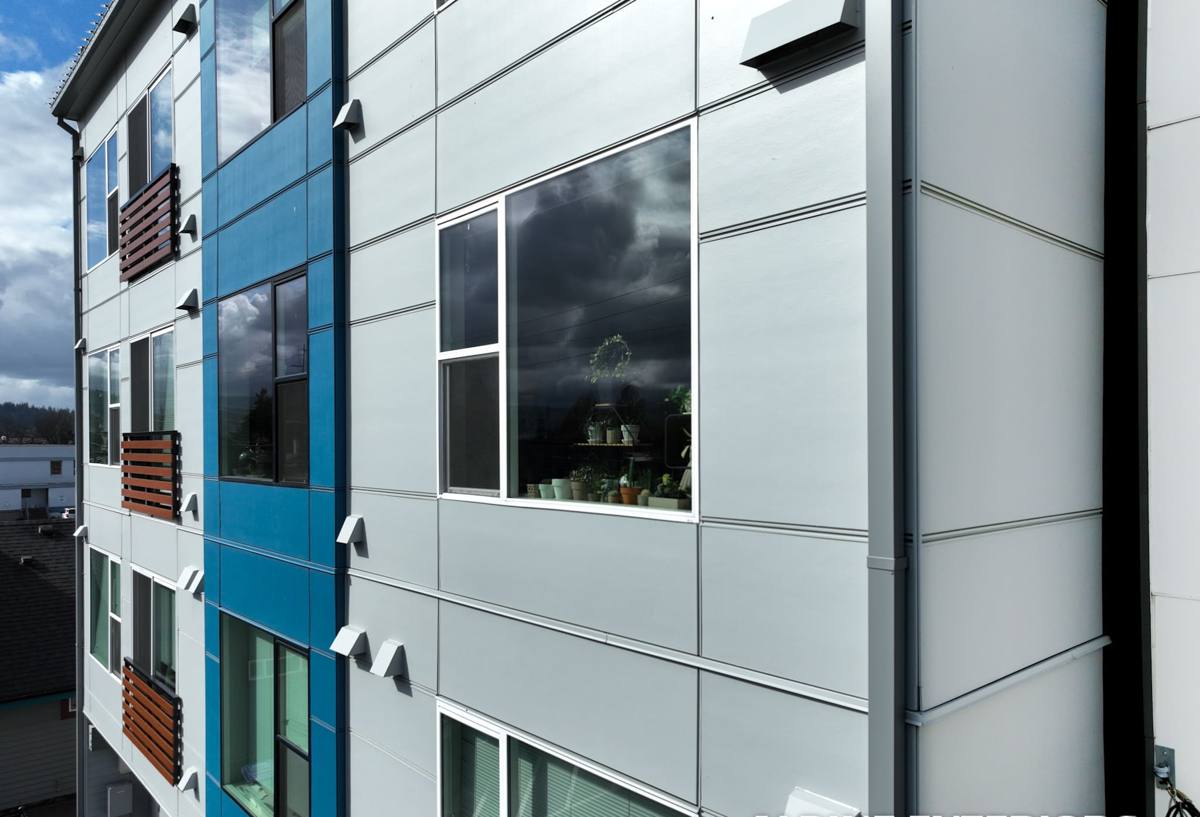
What Edison Homes Actually Need From Their Windows
Not every energy-efficient window on the market is a good fit for this stretch of Skagit County. A few things matter more here than they would in a drier, inland climate:
- Corrosion-resistant hardware. Salt air pits cheap fasteners and hinges over a few seasons. Locks, hinges, and balance systems need to be rated for coastal exposure, not just standard-grade.
- Proper flashing and drainage, not just a good window. Even the best window will leak eventually if it's set into an opening without correct flashing and a working drainage path. Most of the failures we see started at the installation, not the product.
- Low-E glass tuned for our gray-sky months. Edison gets more overcast days than sunny ones. Low-E coatings need to be selected to retain the daylight you do get while still cutting heat loss, rather than a coating optimized for a sunnier climate.
- Frame materials that won't wick moisture. Wood looks great but demands upkeep in a climate this damp. Vinyl and fiberglass frames handle sustained moisture exposure with far less maintenance.
- Condensation resistance. Cool, humid air pressed against glass all winter is a recipe for interior condensation and, eventually, sill rot if the window can't manage it.
Window Types and How They Perform Here
Homeowners usually ask us to compare vinyl, fiberglass, and wood-clad options. Here's how each one actually holds up in an Edison-area climate, not just on a spec sheet:
| Frame Type | Coastal/Moisture Performance | Maintenance | Typical Fit |
|---|---|---|---|
| Vinyl | Good — won't rot or corrode, handles salt air well | Low — occasional cleaning | Most homes; best value-to-performance ratio |
| Fiberglass | Excellent — very stable in temperature swings and moisture, holds paint well | Low | Homes wanting a longer-term investment or larger window openings |
| Wood-clad | Fair — the clad exterior helps, but any breach in the cladding invites rot | High — needs regular inspection and upkeep | Homes prioritizing an interior wood look, willing to maintain it |
| Aluminum | Poor in this climate — conducts cold, prone to condensation and corrosion near the water | Moderate | Generally not recommended for Edison-area homes |
For most Edison homes we recommend vinyl or fiberglass. Both resist the moisture and salt exposure that define this area, and neither demands the ongoing maintenance that wood needs to stay watertight through a Skagit County winter.
A Note on Aluminum-Frame Replacements
We don't push aluminum replacements for homes this close to the water. It's not that aluminum windows are poorly made — it's that the material itself conducts cold efficiently, which invites condensation on the interior frame, and factory finishes can pit over time in salt air. That's a trade-off, not a defect, and it's one we'd rather flag up front than have a homeowner discover it themselves five winters in.
Our Installation Process
The window is only half the job. The other half is how it goes into the wall, and that's where most premature failures start. Here's how we approach it:
- Assessment. We check existing framing, sills, and flashing for hidden rot or moisture damage before quoting anything — you can't price a repair you haven't found yet.
- Removal. Old windows come out carefully, with attention to whatever's revealed underneath. This is often the first real look anyone's had at the wall cavity in decades.
- Flashing and prep. We flash each opening to shed water downward and outward, layered correctly with the house wrap or building paper already in place — this step is what actually keeps water out, more than the window itself.
- Setting the window. Shimmed level and plumb, fastened per manufacturer spec, with attention to how it will perform under wind-driven rain specifically, not just a standard rain event.
- Sealing. Interior and exterior sealant appropriate for a marine climate — not a generic caulk that will chalk and crack after one or two wet seasons.
- Final check. Operation, lock engagement, and a visual inspection of the finished flashing and trim before we call it done.
Signs Your Edison Home's Windows Need Attention
A lot of window replacement in this area starts as a call about something else — a musty smell, a drafty room, a sill that feels soft underfoot. Watch for:
- Fogging or moisture between double-pane glass (a failed seal — the insulating gas is gone)
- Soft, spongy, or discolored wood at the sill or lower frame
- Visible moss or algae growth on or around the frame
- Difficulty opening, closing, or locking a window that used to work fine
- A draft you can feel with the window fully closed and locked
- Condensation forming on the interior glass regularly through fall and winter
- Paint or finish that's peeling or bubbling near the window trim
Any one of these on its own might just mean a window is due. Two or three together, especially soft wood plus visible moisture, usually means water has been getting into the wall assembly for a while — worth having looked at before it becomes a bigger repair than the windows themselves.
Cost Factors for Edison-Area Window Replacement
Every home is different, so we won't quote a number without seeing the job, but the factors that move the price are consistent:
| Factor | Why It Matters |
|---|---|
| Frame material | Vinyl is generally the most budget-friendly; fiberglass costs more upfront but needs less upkeep |
| Number and size of openings | More windows and larger openings mean more material and labor |
| Condition of existing framing | Hidden rot found during removal adds repair work before the new window can go in |
| Glass package | Low-E coatings, gas fills, and impact-resistant glass all add cost but also add performance |
| Access and site conditions | Second-story or hard-to-reach windows take more time and equipment |
| Trim and finish work | Matching existing exterior trim or interior casing adds finishing labor |
The honest broad range for a full window replacement project runs from a few thousand dollars for a handful of standard-size vinyl windows up to well into five figures for a whole-house upgrade with larger openings or a higher-end glass package. We'll walk your specific home and give you real numbers, not a phone estimate.
Why Hire a Crew That Already Works Edison
Edison is a small enough community that generic, region-wide contractor knowledge doesn't cut it. A crew that already works homes in this part of Skagit County knows what the wind off the bay does to a west-facing wall, what moss growth on a north side really signals underneath the surface, and which flashing details actually hold up through a full wet season here rather than just on paper. That's not something you get from a national franchise cycling through unfamiliar territory — it's something you get from doing this specific work, in this specific climate, repeatedly.
We also stand behind the installation itself, not just the manufacturer's product warranty. If flashing or sealant work fails because of how it was installed, that's on us to make right — not a claim you have to fight a manufacturer over.
Get a Straight Answer on Your Windows
If your Edison home's windows are drafty, foggy, sticking, or just old enough that you're wondering, we'll come take a real look — no pressure, no upsell script. We'll tell you honestly whether it's time to replace, what it'll take to do the job right for this climate, and roughly what it'll cost. Fill out the form below for a free estimate.