 Anacortes Siding
 Building Decks for Old Town Anacortes's Marine Climate
Old Town Anacortes sits close to the water, and that proximity shapes almost every decision that goes into a well-built deck here. Salt-laden air off the surrounding waterways accelerates corrosion on anything metal. Driving rain off Puget Sound and Rosario Strait finds its way into any gap in the framing or flashing. And the mix of mature trees and marine humidity that Skagit County is known for keeps shaded surfaces damp for weeks at a stretch, which is exactly what moss and algae need to take hold. A deck built to a generic spec sheet — the kind you'd see in a big-box how-to guide — usually starts showing problems within a few seasons out here. A deck built for this specific environment doesn't.
We work in Old Town Anacortes regularly, and the patterns repeat: rusted fastener heads bleeding rust streaks down light-colored decking, ledger boards that were never properly flashed and are now soft at the rim joist, and north-facing or tree-shaded sections of decking that stay green and slick most of the year. None of that is inevitable. It's the result of shortcuts that don't show up on day one.
What Older Anacortes Homes Need From a Deck
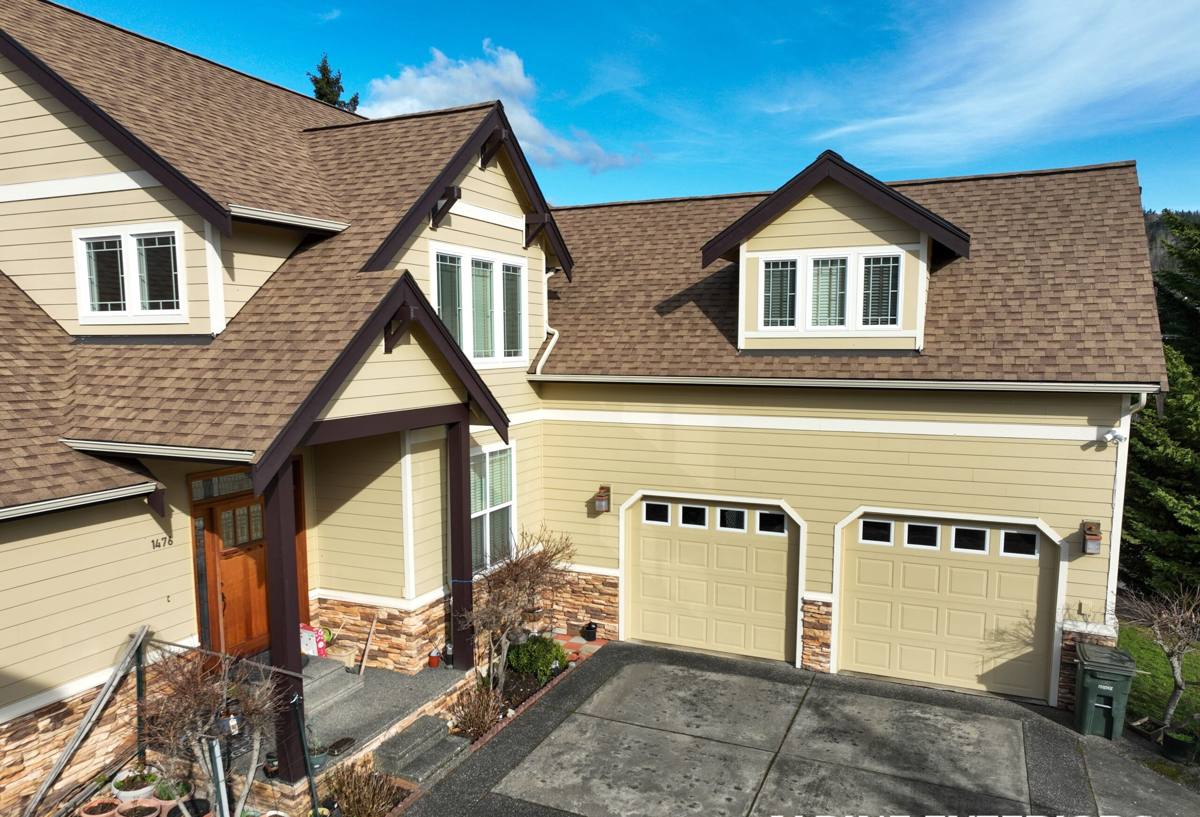
Old Town's housing stock skews older — many homes were built well before modern deck codes existed, which means a lot of "replace the deck" jobs are really "replace a structure that was never built to current standards in the first place." That changes the job. We're not just swapping boards; we're often correcting ledger attachment, undersized framing, or footings that were poured too shallow or not at all.
The neighborhood's terrain adds another layer. Grades change quickly close to the water, and a lot of lots have some slope to them, which means post heights, footing depth, and stair runs all need to be worked out on-site rather than assumed from a standard plan. Add in mature landscaping that shades parts of many yards for a good chunk of the day, and you've got a deck that needs to perform in wet, low-light conditions for months at a time — not just survive an occasional rainstorm.
Common Starting Points We See
- An aging deck attached to the house with no flashing, or flashing that has failed
- Wood posts set directly in soil or in undersized concrete, now soft or leaning
- Galvanized fasteners that have rusted and stained the decking above them
- Sections that never dry out fully because of shade and airflow problems
- Railings that no longer meet current guard height or baluster spacing requirements
Decking Material Options for a Salt-Air, High-Moisture Site
There's no single "best" decking material — there's a best material for this yard, this exposure, and this budget. Here's how the common options actually perform close to the water in Skagit County, based on how we see them hold up.
| Material | Salt air behavior | Moss/moisture resistance | Maintenance |
|---|---|---|---|
| Cedar | Naturally rot- and insect-resistant; needs the right fasteners to avoid staining | Good if kept clean and coated; can green up in deep shade | Refinish every 2–3 years |
| Pressure-treated fir/pine | Budget-friendly; fasteners must be rated for treated lumber | Prone to moss/algae in shaded, damp spots without upkeep | Wash and reseal regularly |
| Composite decking | Doesn't rust or rot; check manufacturer fastener specs | Resists moisture damage but can still get slick with algae film | Periodic cleaning, no refinishing |
| PVC decking | Fully synthetic, no wood to rot or absorb salt spray | Very moisture-tolerant; can still need cleaning in shaded areas | Lowest upkeep, higher upfront cost |
Composite and PVC products have gotten a lot of use near the Anacortes waterfront because they take moisture and salt air out of the equation for the decking surface itself. But they're not maintenance-free — anything that sits in shade near the water will still grow algae film and needs periodic cleaning, or it gets slippery. Real wood, when it's the right species and it's properly finished and refinished on schedule, still has a place, especially where matching an older home's look matters. We'll walk through the honest trade-offs for your specific lot rather than push one product line.
Framing and Substructure: Where Deck Failures Actually Start
Almost every deck failure we get called out for in this area starts below the decking boards, not on top of them. The surface material gets the attention, but the framing determines whether the deck is safe and how long it lasts.
Ledger Board Attachment
The ledger board — where the deck bolts to the house — is the single most important connection on an attached deck, and it's also the most common place we find water damage. Proper flashing that sheds water away from the house band board is non-negotiable in a climate that gets this much driving rain. We flash every ledger correctly; we don't rely on caulk alone to keep water out.
Fasteners and Hardware
In salt air, standard galvanized hardware corrodes faster than most homeowners expect, sometimes within a handful of years. We use stainless steel or heavy-duty coated fasteners and joist hangers rated for the exposure and for whatever decking material goes on top, so you're not looking at rust streaks or failing hardware a few seasons in.
Posts and Footings
On sloped or marginal ground, footing depth and post-to-footing connections matter more than they would on a flat, well-drained lot. We size and set footings to the actual soil and grade conditions on your property, not a generic assumption.
Permitting and Guardrail Requirements
Deck work in Anacortes and unincorporated Skagit County generally falls under building permit requirements once you're past a certain size or height, and guardrails, stair geometry, and baluster spacing are governed by code regardless of permit thresholds. Requirements can shift, and every lot has its own wrinkles — setbacks, shoreline considerations if you're close enough to the water, and grade — so we confirm what applies to your specific project rather than assume. We handle the permitting process as part of the job so you're not left chasing it down yourself.
Our Deck Building Process
The process is straightforward, but we don't skip steps, especially the ones that don't show once the decking is down.
- Site visit and assessment — we look at grade, drainage, shade patterns, and the condition of any existing structure
- Design and material selection — sized to your home and budget, with an honest rundown of material trade-offs for your specific exposure
- Permitting — we pull what's required and confirm guardrail and structural requirements before framing starts
- Demolition of the old deck (if applicable) — including inspection of the ledger and rim joist area for hidden rot
- Framing — ledger flashing, corrosion-resistant hardware, and footings sized to your soil and grade
- Decking and railing installation — fastened per manufacturer spec for whatever material you've chosen
- Final inspection — signed off before we call the job done
- Walkthrough — we go over care and maintenance specific to your deck's exposure
Maintenance in a Salt Air, Moss-Prone Environment
A well-built deck in Old Town Anacortes still needs seasonal attention — that's the reality of this climate, not a flaw in the build. Shaded and north-facing sections benefit from a wash-down before moss and algae get a foothold, ideally before the wettest months set in. Wood decking needs its finish checked annually and reapplied on schedule; composite and PVC surfaces don't need refinishing but still need periodic cleaning to stay from getting slick. Fastener heads and any exposed hardware are worth a visual check each year — catching an early rust spot is a lot cheaper than catching a failed connection. None of this is heavy work, but skipping it is how a well-built deck ends up looking, and behaving, like a poorly built one.
Why Hire a Crew That Already Works Old Town Anacortes
Building a deck that holds up here isn't about a special product or a secret technique — it's about consistently making the right call on flashing, fasteners, footing depth, and material choice for this specific environment, every single time, instead of building to a generic spec and hoping the weather cooperates. A crew that works Old Town Anacortes regularly has already seen how the local grade, shade patterns, and salt air play out on real decks over real years, and builds accordingly from the first footing. That's the difference between a deck that needs real repairs in five years and one that just needs the maintenance any deck in this climate deserves.
If you're planning a new deck or replacing one that's showing its age, we're happy to take a look and put together a straightforward estimate — no pressure, no obligation. Use the form below to get started.