 Anacortes Siding
 Storm Damage Roof Repair for Conway Homes
Conway sits low in the Skagit River valley between Mount Vernon and Stanwood, right in the path of the wind funnels that come off the water and up the flats. When a winter system rolls through, homes here take a different kind of beating than roofs up on higher, more sheltered ground — sideways rain that finds every weak seam, gusts that lift shingle tabs and loosen ridge caps, and standing moisture afterward that turns any small opening into a slow leak. If you've got a tarp on your roof right now, or you found a stain on a ceiling after the last storm, this page covers what actually needs to happen next.
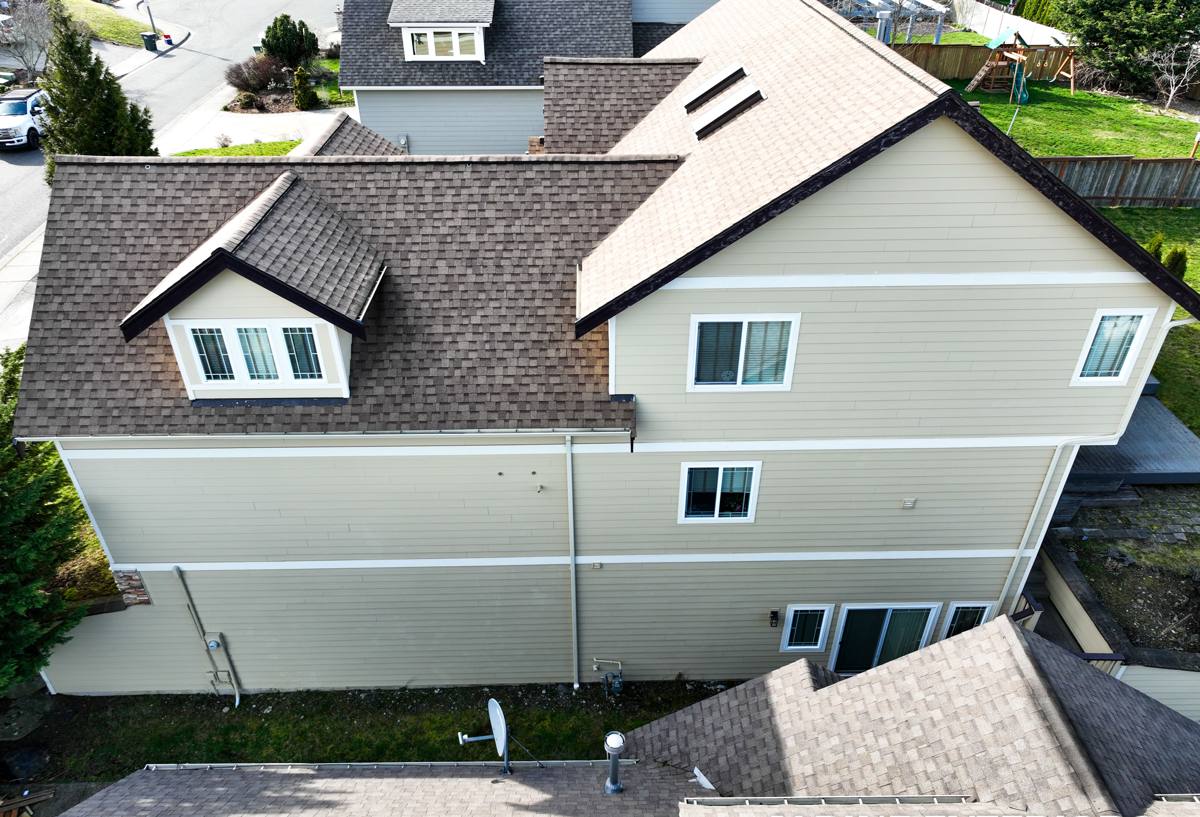
Why Storm Damage Here Behaves Differently
Skagit County's storm damage isn't usually one dramatic event — it's cumulative. A roof that's already carrying a season or two of moss growth and slightly softened felt underlayment doesn't need much wind to fail at the margins. Add the valley's exposure to funneled wind off Puget Sound and the Skagit River corridor, plus long stretches of driving rain that don't let a roof dry out between storms, and you get a specific failure pattern:
- Wind-lifted shingle tabs along ridgelines and roof edges, where uplift is strongest
- Torn or missing ridge cap shingles after gusts catch an exposed edge
- Flashing separation around chimneys, skylights, and wall-to-roof transitions, where sideways rain pushes water past seals that would hold fine in a straight-down rain
- Granule loss on older asphalt shingles, accelerating wear even where nothing looks obviously broken
- Moss-driven lifting — moss mats hold moisture against shingles and physically pry them up over time, so storm wind finds an edge that's already primed to go
That last point matters more in Conway and the surrounding Skagit lowlands than almost anywhere else we work. The moss season here runs long — shaded, damp roof sections can stay wet for weeks at a stretch — and a roof that hasn't been cleaned in a couple of years is simply more vulnerable when the wind picks up.
What a Correct Storm Repair Actually Involves
A lot of storm repair work in this region is done fast and shallow — tarp it, replace the visibly missing shingles, call it done. That approach misses the damage that isn't visible from the ground, and it's how a "small" storm repair turns into a full re-roof eighteen months later. Here's what we check every time, storm damage or not:
Above the Shingles
We look at the whole exposed field, not just the spot that's leaking. Wind damage rarely stays contained to one shingle — if one tab lifted, its neighbors usually took stress too, even if they're still nailed down. We also check ridge caps and hip lines, since those are the first things to go in a wind event and the easiest to miss from the ground.
At the Penetrations
Chimneys, vents, and skylights are where storm leaks actually start more often than in the open field of the roof. Flashing that's been fine for years can separate a fraction of an inch during a big wind event — enough for driving rain to get behind it, not enough to be obvious on a walk-by.
Underneath
If water made it past the shingles, the underlayment and decking are the next line of defense. We check for soft spots, staining, and delamination in the attic or from any accessible interior point, because that's the damage that determines whether this is a patch job or something bigger.
At the Edges
Gutters, drip edge, and fascia take direct wind load and are often the first hardware to fail. Loose gutters can also redirect water back up under the roof edge, which causes damage that looks like a roof leak but is really a drainage failure.
Our Process, Storm to Finish
- Emergency stabilization — if you've got active leaking or exposed decking, we get a tarp on correctly (not just draped and hoped-for) to stop further water intrusion while we schedule the real fix.
- Full inspection — we check the entire roof, not just the damaged section, and document what we find with photos.
- Honest scope and estimate — you get a written breakdown of what's actually damaged, what's a repair versus what's a warning sign of bigger issues, and a straight cost range. No pressure to upsell a repair into a replacement unless the roof genuinely needs it.
- Insurance documentation — if you're filing a claim, we provide the inspection findings and photos in a format adjusters can use. We don't handle the claim for you, but we make sure the paperwork reflects the real damage.
- Repair — matching shingles and flashing details to your existing roof where possible, replacing underlayment or decking if it's compromised, and re-securing anything the storm loosened even if it isn't currently leaking.
- Follow-up check — we want to see how the repair holds through the next real storm, not just walk away after the first dry week.
Repair vs. Replace: How We Make the Call
| Situation | Usually a Repair | Usually Points to Replacement |
|---|---|---|
| Age of roof | Under 15 years, single storm event | Near or past expected lifespan already |
| Extent of damage | Isolated section, clear cause | Damage scattered across multiple roof planes |
| Decking condition | Solid, dry underneath | Soft spots or rot found during inspection |
| Moss/granule condition | Minor, recent buildup | Heavy moss history with widespread granule loss |
| Prior repairs | First or second repair on this roof | Repeated patch jobs in the same areas |
Most storm calls in Conway turn out to be legitimate repairs, not replacements — but we won't tell you that without actually getting up there and checking. A roof that's been neglected for a few moss seasons is a different conversation than a well-maintained roof that just took a bad gust.
What to Do Right After a Storm
- Check ceilings and attic spaces for new staining, even faint ones — early leaks are often subtle
- Look for shingle debris in the yard or gutters, a sign of wind damage even if the roof looks intact from the ground
- Avoid getting on the roof yourself, especially wet or moss-covered surfaces — this is exactly the kind of footing that causes falls
- Photograph any visible damage from the ground for your records before repairs begin
- Call for an inspection promptly — a small storm leak left over a wet Skagit County winter can compromise decking before spring
- If you're filing an insurance claim, get an independent inspection before the adjuster visit so you know what you're working with
Why a Crew That Already Works Conway Matters
Storm damage assessment is partly about knowing what's normal wear for this specific location versus what's storm-caused. A crew that regularly works the Conway area and the broader Skagit River valley knows the wind exposure patterns particular to low-lying, funnel-exposed properties, recognizes moss growth patterns tied to this valley's shade and moisture cycle, and isn't guessing at how local shingle products and flashing details typically hold up against this area's weather. That local pattern recognition is what keeps a repair from missing a second, less obvious problem the storm also caused.
It also means faster response. After a significant wind event, storm repair requests spike across the whole county, and a crew already routed through this area can get to a tarp-and-stabilize call sooner than one dispatching from farther out.
Preventing the Next One
Storm damage repair fixes what already happened. Reducing the next storm's impact is a separate, cheaper conversation:
- Regular moss removal, especially on shaded north-facing roof sections that stay damp longest
- Periodic flashing and seal checks around chimneys and vents, since these are the first points to fail under wind stress
- Gutter cleaning before the wet season, so wind-driven rain has somewhere to go instead of backing up under roof edges
- Prompt attention to minor leaks — a small one caught early is a patch; the same leak left through a Skagit County winter is often a decking replacement
If your roof has storm damage, whether it's an active leak, a tarp that's been up too long, or just a nagging feeling something's off after the last windstorm, we'll come take an honest look. The estimate is free, there's no pressure attached to it, and you'll get a straight answer about what's actually going on up there — just fill out the form below to get started.