 Anacortes Siding
 Burlington's Climate Is Rougher on Siding Than It Looks
Burlington sits inland from the immediate Skagit County coastline, but it still sits inside the same weather system that soaks the whole valley from October through May. Homes here deal with long stretches of steady, driving rain, high ambient humidity even on dry days, and enough salt-tinged marine air drifting in off Padilla Bay and the Sound to matter over the life of a siding job. Add a mild climate that never gets cold enough to fully dry things out, and you get near-constant conditions for moss and algae to take hold on north-facing walls, under eaves, and anywhere siding stays damp longer than it should.
None of this is dramatic on any single day. It's cumulative. Siding that's a little wrong at the seams, a little short on drainage, or a little too porous will show it in year three or four, not year one — bubbling paint, soft trim, dark streaking, or boards that have started to swell at the butt joints. Burlington's mixed housing stock, from older farmhouse-style homes to ranch houses from the 60s through 80s to newer subdivision builds, all face the same basic problem: this is a wet climate that punishes shortcuts.
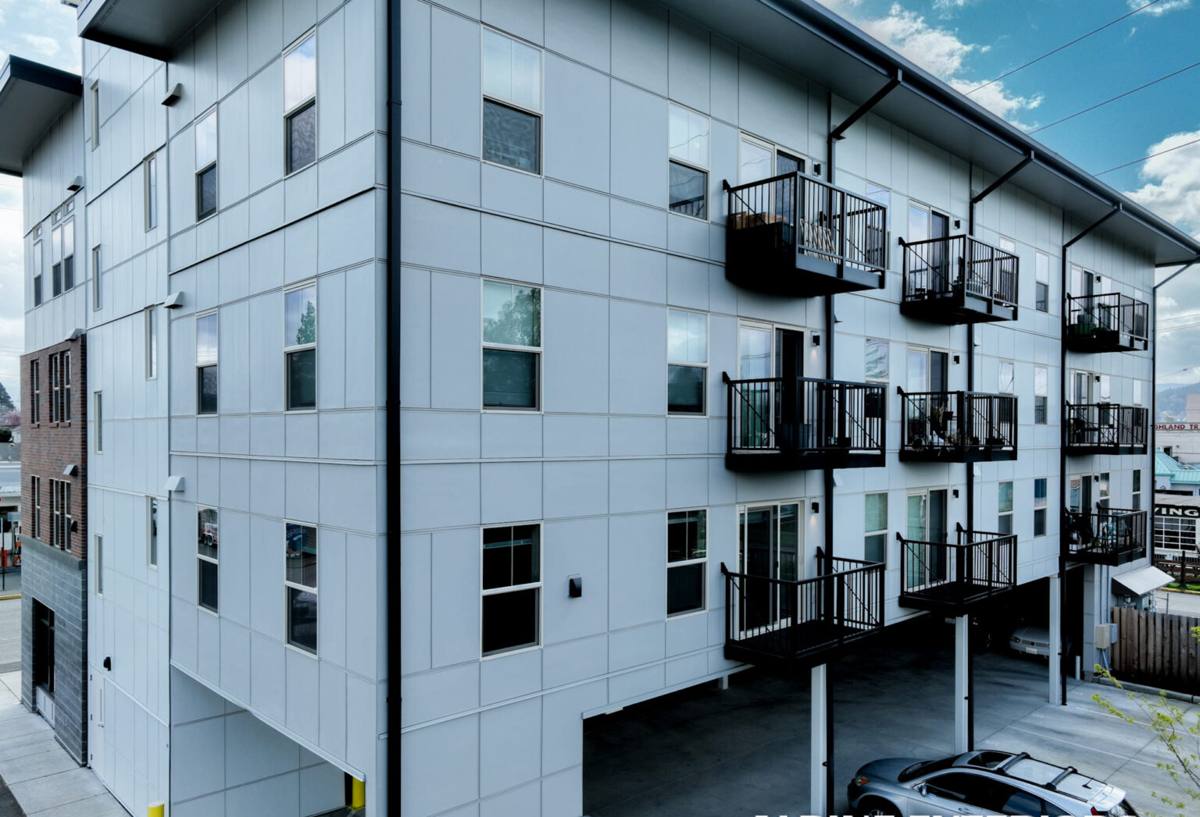
Why We Only Install James Hardie
We standardized on James Hardie fiber cement siding for every job we do, including the ones in Burlington, and we don't install vinyl, LP SmartSide, Cemplank, Allura, or primed wood siding. That's not a marketing position — it's a professional one, built on what actually holds up in this climate over 20-30 years versus what looks fine on day one.
Fiber cement doesn't rot, doesn't feed insects, and doesn't absorb water the way wood-based products can. James Hardie in particular engineers its products by climate zone (HZ5 for the Pacific Northwest) specifically to handle sustained moisture exposure, and the ColorPlus factory finish is baked on under controlled conditions rather than field-painted, which matters a lot when you're trying to get a topcoat to hold up through a Skagit Valley winter. It's also non-combustible, which is a real consideration as wildfire smoke and dry-season risk have become more of a regional conversation even west of the Cascades.
Which Hardie Product Line Fits Most Burlington Homes
Most of the homes we work on here end up with HardiePlank lap siding, since it matches the traditional lap profile already common on ranch and farmhouse-style homes throughout the valley. HardieShingle is a good fit for homes with gable accents or a craftsman look where a straight lap profile would look out of place. HardiePanel, used with battens, shows up on more modern builds or as an accent on garages and additions. None of these are one-size-fits-all — the right call depends on the home's existing lines and what the roofline and trim are already doing.
What a Correct Installation Actually Involves
Fiber cement siding is only as good as the water management behind it. This is the part that's invisible once the job is done, and it's also the part homeowners get shortchanged on most often when a crew is moving fast or unfamiliar with the product.
Drainage and the Rain Screen
In a climate like this, siding needs a way to shed the water that inevitably gets behind it — through wind-driven rain at seams, condensation, or minor flashing imperfections that show up over time. A proper rain-screen gap behind the siding, correct weather-resistive barrier lapping (always shingled so water flows down and out, never trapped), and flashing at every window, door, and horizontal trim transition are what actually keep moisture from sitting against the wall sheathing.
Fastening and Joints
James Hardie publishes exact fastener spacing, nailing zones, and butt-joint treatment requirements, and following them isn't optional if you want the manufacturer's warranty to mean anything. Butt joints need to be properly flashed or caulked with a product rated for the application — not just butted together and painted over. Corners, trim, and penetrations (hose bibs, vents, light fixtures) are where a rushed job fails first, because that's where water finds a way in.
Our Process
- Assessment and moisture check — We look at the existing siding, trim, and any soft or discolored areas before quoting anything, since hidden rot changes the scope.
- Tear-off and sheathing inspection — Old siding comes off and we check the sheathing underneath for damage before anything new goes up. Repairs happen here, not after the fact.
- Weather barrier and flashing — Correctly lapped house wrap, window and door flashing, and a rain-screen gap go in before a single piece of Hardie touches the wall.
- Installation to manufacturer spec — Fastener placement, joint treatment, and clearances (grade, roofline, deck) follow James Hardie's published requirements, not shortcuts.
- Trim, caulking, and paint touch-up — Factory-finished ColorPlus boards need less field painting than raw material, but trim, cut edges, and fastener heads still get properly sealed and finished.
- Final walkthrough — We go over the job with the homeowner before calling it done, not after the invoice is sent.
Why a Crew That Already Works Burlington Matters
A lot of siding problems in this area trace back to a crew that installed the product correctly for a drier climate and just didn't adjust. A contractor who works Skagit County regularly already knows how much drainage detail this weather demands, has a working relationship with local building departments for permitting, and has seen how homes here actually age — which walls take the worst weather exposure, which older homes tend to have moisture issues hiding under the existing siding, and which trim details need extra attention. That local pattern-recognition is worth more than it sounds like on paper; it's the difference between a crew guessing and a crew that's already seen the failure mode before it happens.
What Drives the Cost of a Burlington Siding Project
Every home is different, but the same handful of factors drive most of the price variation we see on jobs in this area. Broad ranges only — a proper number always comes from an on-site look.
| Cost Factor | Why It Matters |
|---|---|
| Tear-off condition | Rotted sheathing or hidden moisture damage found during tear-off adds repair scope before new siding can go on |
| Home size and story count | More wall area and second-story access (scaffolding, lifts) both add labor time |
| Trim and architectural detail | Gables, dormers, and multiple roof transitions mean more flashing and cutting versus a simple rectangular wall |
| Siding profile chosen | HardiePlank lap, HardieShingle, and HardiePanel differ in material cost and install labor |
| Color and finish | Factory ColorPlus finishes cost more up front than primed-only boards but eliminate a full field-paint job |
Signs Your Current Siding Is Losing the Fight
Because failure in this climate is gradual, it helps to know what to actually look for before a small problem becomes a sheathing repair. Walk your exterior once a year, especially after the wet season, and check for:
- Persistent moss or dark green-black streaking that doesn't wash off, especially on shaded or north-facing walls
- Paint that's bubbling, peeling, or chalking rather than just fading evenly
- Soft spots when you press on the siding near the bottom edge or around window trim
- Visible gaps or separation at butt joints, corners, or where siding meets trim
- Warping, cupping, or boards that no longer sit flat against the wall
- Water staining or swelling on interior walls near exterior corners, which usually means moisture already got behind the siding
Any one of these on its own isn't necessarily an emergency, but a home showing two or three of them at once is usually past the point where caulk and paint will buy much more time.
Long-Term Care for Hardie Siding in This Climate
James Hardie siding is low-maintenance compared to wood, but "low-maintenance" doesn't mean "no maintenance" in a climate this wet. A yearly rinse to knock down moss and algae buildup, keeping gutters clear so water doesn't sheet down the wall face, and trimming back vegetation that keeps a wall shaded and damp all extend the life of the finish significantly. Caulking at trim joints and penetrations should get a visual check every year or two, since that's the first line of defense and the cheapest thing to maintain before it becomes a bigger repair.
If your Burlington home's siding is showing its age, or you're planning ahead rather than reacting to a problem, we're happy to take a look and give you a straight answer about what it needs. Reach out for a free, no-pressure estimate — there's a form right below to get started.