 Anacortes Siding
 Windows Built for Bow's Particular Climate
Bow sits in that stretch of Skagit County where Samish Bay weather and open farmland wind meet — homes here take a different kind of beating than houses tucked into downtown Anacortes or up on Fidalgo Island's more sheltered lots. Salt-laden air off the bay, long stretches of driving rain, and a moss season that seems to run longer every year all work on window frames, seals, and glazing in ways that show up as fogged glass, swollen sashes, and drafts within a decade if the original install or the window itself wasn't up to the job.
When we replace windows in Bow, we're not just swapping glass for better glass. We're addressing how this specific microclimate attacks a window system: frame material choice, seal quality, flashing detail, and glazing package all matter more here than they would in a drier inland town.
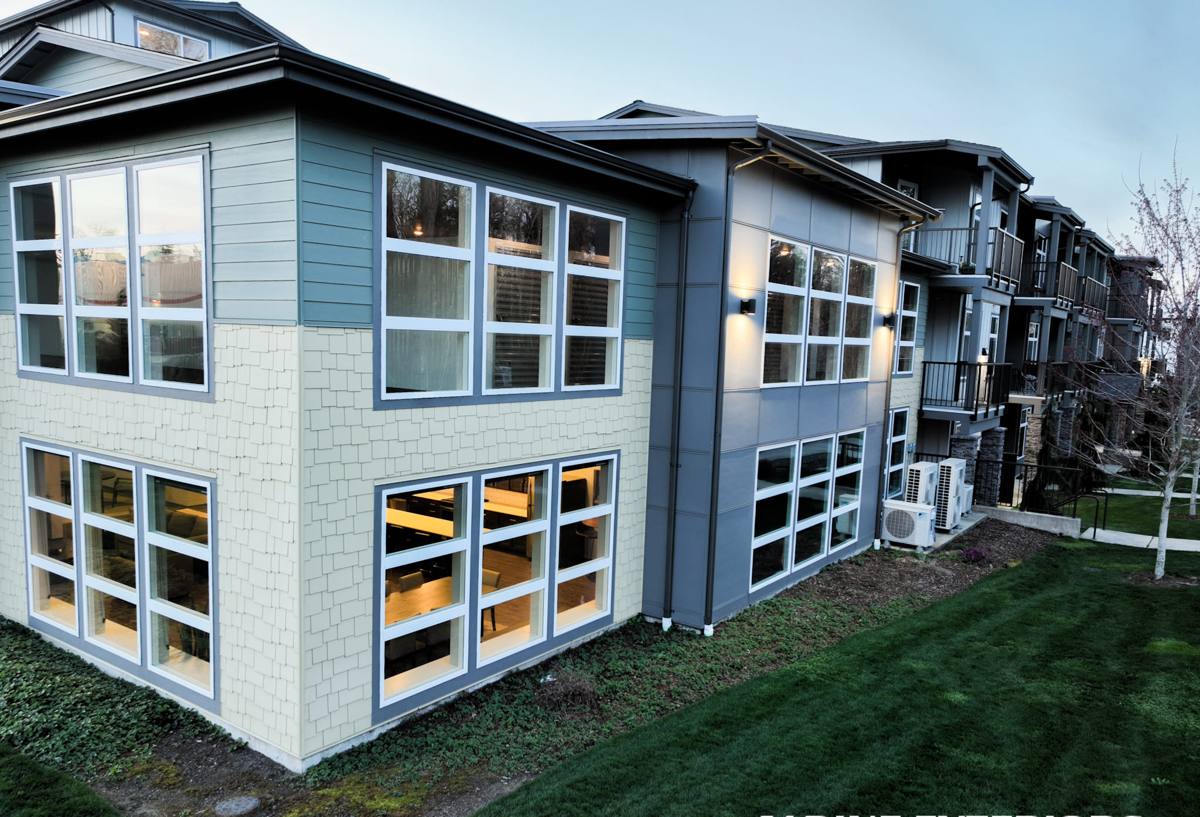
What Bow Homes Actually Need From Their Windows
Salt Air and Corrosion
Proximity to Samish Bay means airborne salt settles on everything, including window hardware. Cheap or unfinished aluminum components corrode faster here, and steel fasteners that aren't properly rated will rust and streak the frame within a few years. We spec corrosion-resistant hardware and fastening on every install out this way, not as an upsell but because it's what the location requires.
Driving Rain and Water Management
Wind-driven rain doesn't just hit glass — it gets pushed sideways into the gaps around a window if the flashing and sealant details aren't right. This is the single biggest cause of the rot and interior water staining we find when we pull old windows out of Bow homes. A window can have excellent glass and still fail the house if it's not flashed correctly into the wall assembly.
Moss, Shade, and Trapped Moisture
The tree cover and long damp season around Bow keep moss and algae going most of the year, and that growth doesn't stop at the roofline — it creeps onto north-facing sills and trim, holding moisture against wood and vinyl longer than direct sun and open air would allow elsewhere. Window sills and trim in shaded, moss-prone areas need materials and finishes that shed water rather than absorb it.
Signs a Bow Home Needs Window Replacement, Not Just Repair
- Fogging or a visible haze between panes — the sealed unit's gas fill has failed and can't be restored
- Soft or spongy wood at the sill or lower frame corners
- Visible daylight or a draft you can feel at the frame edge on a windy day
- Windows that are difficult to open, close, or lock — frames have swollen or racked out of square
- Condensation forming on the inside of the glass regularly, even with normal ventilation
- Rising heating bills with no other obvious cause
- Visible rust streaks or corrosion on hardware or frame fasteners
Not every one of these means a full replacement — some point to a caulking or flashing repair instead. Part of an honest estimate is telling you which category your windows fall into before we quote anything.
What a Correct Window Installation Involves
The window unit itself is maybe half the job. The other half is how it's integrated into the wall, and that's where most of the long-term failures we see around Skagit County actually originate.
Removal and Opening Prep
We check the rough opening for hidden rot or damage once the old window is out — this is often the first real look anyone's had at that framing in decades, and in a wet climate like this it's not unusual to find some softened wood that needs attention before a new window goes in.
Flashing and Water Barrier
Proper flashing tape and sill pan details direct any water that does get past the exterior cladding back out, rather than letting it pool at the sill. Given how much wind-driven rain this area sees, we don't treat this step as optional or interchangeable with just running a bead of caulk around the edge.
Setting and Sealing
The window is shimmed level and square, fastened per the manufacturer's schedule, and sealed with backer rod and a quality sealant rated for exterior exposure — not just whatever's cheapest at the counter. A window that's slightly out of square will bind, leak, or wear its seals unevenly within a few seasons.
Interior and Exterior Finish
Trim is reinstalled or replaced, gaps are insulated (not overpacked, which can bow the frame), and exterior trim is sealed and painted or capped so it doesn't become the next moss and moisture trap.
Choosing the Right Glazing and Frame Package
| Factor | Why It Matters in Bow |
|---|---|
| Frame material | Vinyl and fiberglass resist salt-air corrosion better than bare aluminum; fiberglass holds up well to the freeze-thaw swings and moisture cycling common here |
| Glazing (double vs. triple pane) | Double-pane with a good low-E coating covers most Bow homes; triple-pane adds real value on north- or west-facing walls that catch the worst of the wind and rain |
| Gas fill (argon/krypton) | Improves insulating performance without changing the window's appearance — worth it on a marine climate where heating runs much of the year |
| Low-E coating | Reduces heat loss in winter and cuts glare/heat gain in the brief hot stretches of summer |
| Hardware finish | Corrosion-resistant hardware avoids the rust streaking and stuck locks we commonly see on older salt-exposed windows |
| Sill and trim material | Composite or properly sealed materials resist the moss and moisture buildup that rots untreated wood sills in shaded spots |
We don't push one brand as the only answer. What matters more than the logo on the frame is whether the glazing package, frame material, and installation detail actually match the exposure of that specific wall — a south-facing wall under an eave doesn't need the same spec as a north wall that catches the weather head-on.
Why We're Careful About Certain Window Products
Some window systems on the market use frame designs or seal configurations that are more sensitive to installation error or moisture cycling than others — that's not a knock on any single manufacturer, it's just a reality of how different products are engineered. Our standard is to install systems with a track record of holding up to sustained wet-climate exposure and to back that with installation practices that don't cut corners on flashing or sealing, since even a well-built window will underperform if it's set into the wall incorrectly. If a product line has known maintenance demands — more frequent resealing, sensitivity to UV exposure, or hardware that needs more upkeep in salt air — we'll tell you that upfront rather than let you find out five years in.
Our Process for Bow Window Projects
- On-site assessment — we look at each window's exposure (sun, wind, shade, rain direction), current condition, and the wall assembly behind it
- Honest recommendation — repair where that's the right call, replace where it isn't, and we'll explain the difference
- Written estimate — clear line items for materials, labor, and any framing repair we expect to encounter
- Scheduling around weather — we plan install timing to minimize how long an opening sits exposed, which matters a lot in a rain-heavy area like this
- Installation — proper flashing, sealing, and finish work, not just dropping a new unit into an old opening
- Walkthrough — we check operation, seals, and finish work with you before calling the job done
Why Hiring a Crew That Already Works Bow Matters
Bow isn't a huge market, and it doesn't get the attention that Anacortes proper or the bigger Skagit County towns do from crews based further away. That gap shows in the details — a contractor who mostly works drier, more sheltered areas may not automatically account for how much more aggressive salt exposure and driving rain are out here, and may spec the same window and flashing approach they'd use anywhere else.
We work Anacortes and the surrounding Skagit County communities regularly, Bow included, and that means we're not guessing at how this area's weather treats a window installation over time — we've seen what holds up and what doesn't. That translates into fewer callbacks, and windows that are still sealing properly well past the point where a rushed or generic install would be showing problems.
Maintaining New Windows in a Wet, Salty Climate
- Rinse frames and hardware periodically to clear salt residue, especially on wind-exposed sides of the house
- Keep gutters and downspouts clear so roof runoff isn't sheeting directly down over window heads
- Trim back vegetation that shades sills and trim, since reducing shade cuts down on moss growth
- Check exterior caulking annually and touch it up before a small gap becomes a water path
- Operate locks and hardware periodically through the year so moving parts don't seize from corrosion or disuse
None of this is heavy maintenance — it's the kind of periodic attention that keeps a good window system performing for its full service life instead of fighting the marine climate from day one.
If you're dealing with drafty, foggy, or hard-to-operate windows anywhere around Bow, we're glad to take a look and give you a straightforward, no-pressure estimate — use the form below to get started.